
Circular Economy implementation in Vietnam
Workshop on the application of measurement tools and indicators for the Circular Economy
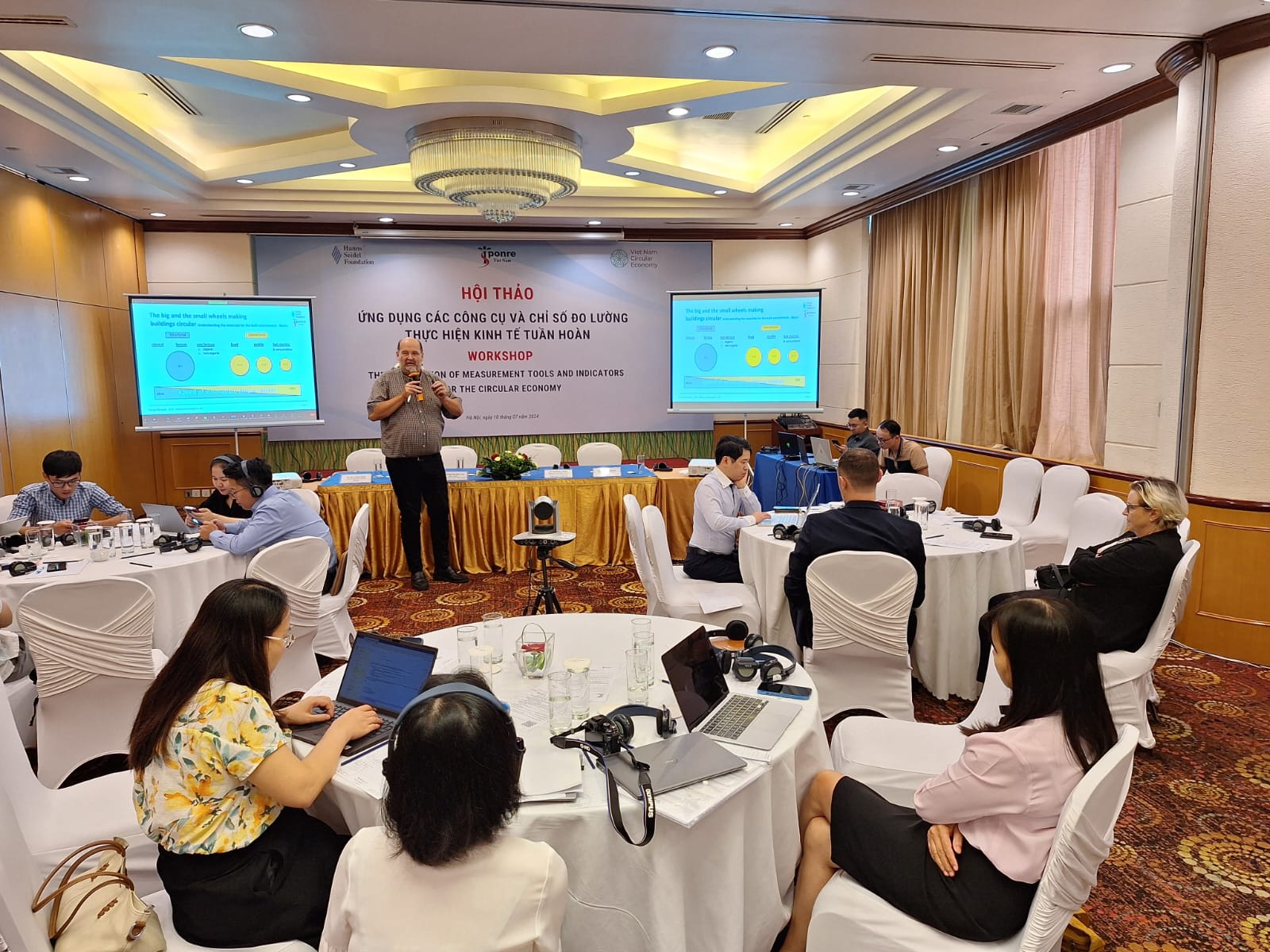
Participants of the workshop are representatives of various ministries, institutes, universities and international organizations.
HSF
As part of its Socio-Economic Development Strategy 2021 - 2030, Vietnam is pursuing the development of circular economy (CE) models to replace the linear economy. The Law on Environmental Protection in 2020 has enshrined CE principles in Article 142. Moreover, the Prime Minister has endorsed the Circular Economy Development Project in Vietnam by Decision No. 687/QD-TTg on June 07, 2022. This endeavor strives to promote CE business models that are consistent with the global trend and the requirements of economic recovery and sustainable development goals (SDGs) implementation. It also aims to facilitate economic restructuring and the transformation of growth model towards modernity. ISPONRE is assigned by MONRE to develop the National Action Plan on Circular Economy (NAPCE).
The workshop focused on discussing and identifying tools and indicators to measure the progress of the circular economy, helping to prepare for the effective implementation of Vietnam's National Action Plan on circular economy. At the opening of the workshop, Associate Professor Dr. Nguyen Dinh Tho highlighted Vietnam's commitment to implementing the Paris Agreement and achieving net-zero emissions by 2050. He emphasized that the circular economy model was adopted as a key solution to meet this goal.
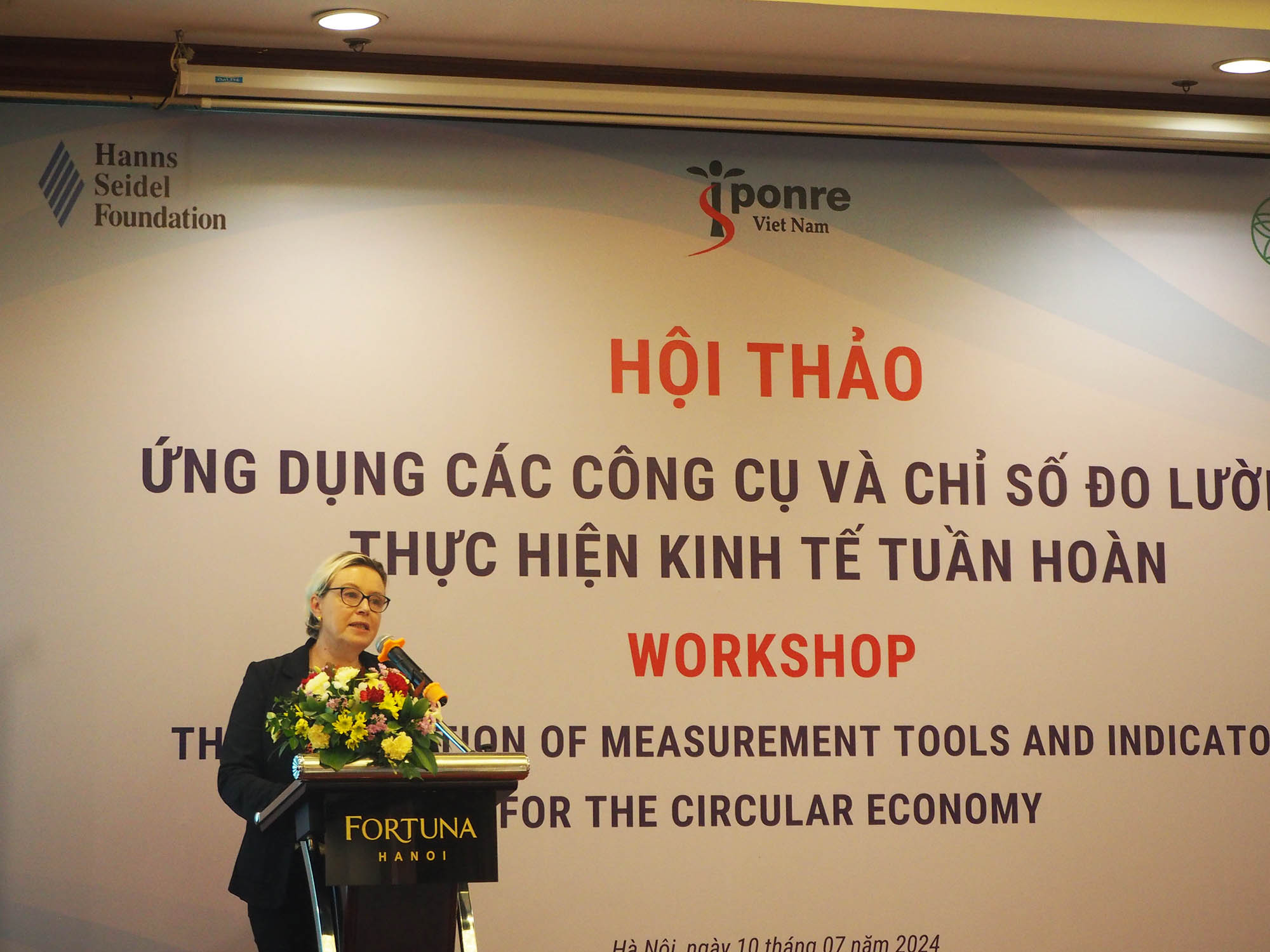
Dr Susane Luther, Director of the Institute for International Cooperation of HSF led the opening remark
HSF
The workshop focused on discussing and identifying tools and indicators to measure the progress of the circular economy, helping to prepare for the effective implementation of Vietnam's National Action Plan on circular economy. The event sparked vibrant discussions and valuable contributions from researchers and experts both from within Vietnam and internationally. Dr. Susane Luther, Director of the Institute for International Cooperation of the Hanns Seidel Foundation, stressed that Germany and Europe have long viewed the circular economy as a driver of innovation and sustainable growth, and underscored the importance of investing in circular economy projects.
Dr. Lai Van Manh, Head of the Department of Natural Resources and Environment, elaborated on Vietnam's recent efforts to build policies and criteria for the circular economy. He mentioned Decree No. 08/2022/ND-CP, which outlines general criteria focused on resource efficiency, product life cycles, and waste reduction across various sectors like agriculture, energy, and transportation. Despite progress, Dr. Manh noted the challenges in developing circular economy indicators due to a lack of a specific legal framework and standardized data collection methods. He proposed recommendations to strengthen legal regulations, develop technical standards, and enhance public awareness through training and communication campaigns. Additionally, Ms. Hoang Thi Dieu Linh from the United Nations Development Program in Vietnam stressed the need for close coordination between ministries to enhance circularity in value chains, particularly in food and construction materials, while proposing interventions to support Vietnam’s National Strategy towards net-zero emissions by 2050.
The workshop is part of the long-standing cooperation between Hanns Seidel Foundation Vietnam and ISPONRE on circular economy that strives to make Vietnam a more circular and sustainable country.