
BBNJ Agreement
National workshop on conservation and sustainable use of marine biological diversity of areas beyond national jurisdiction
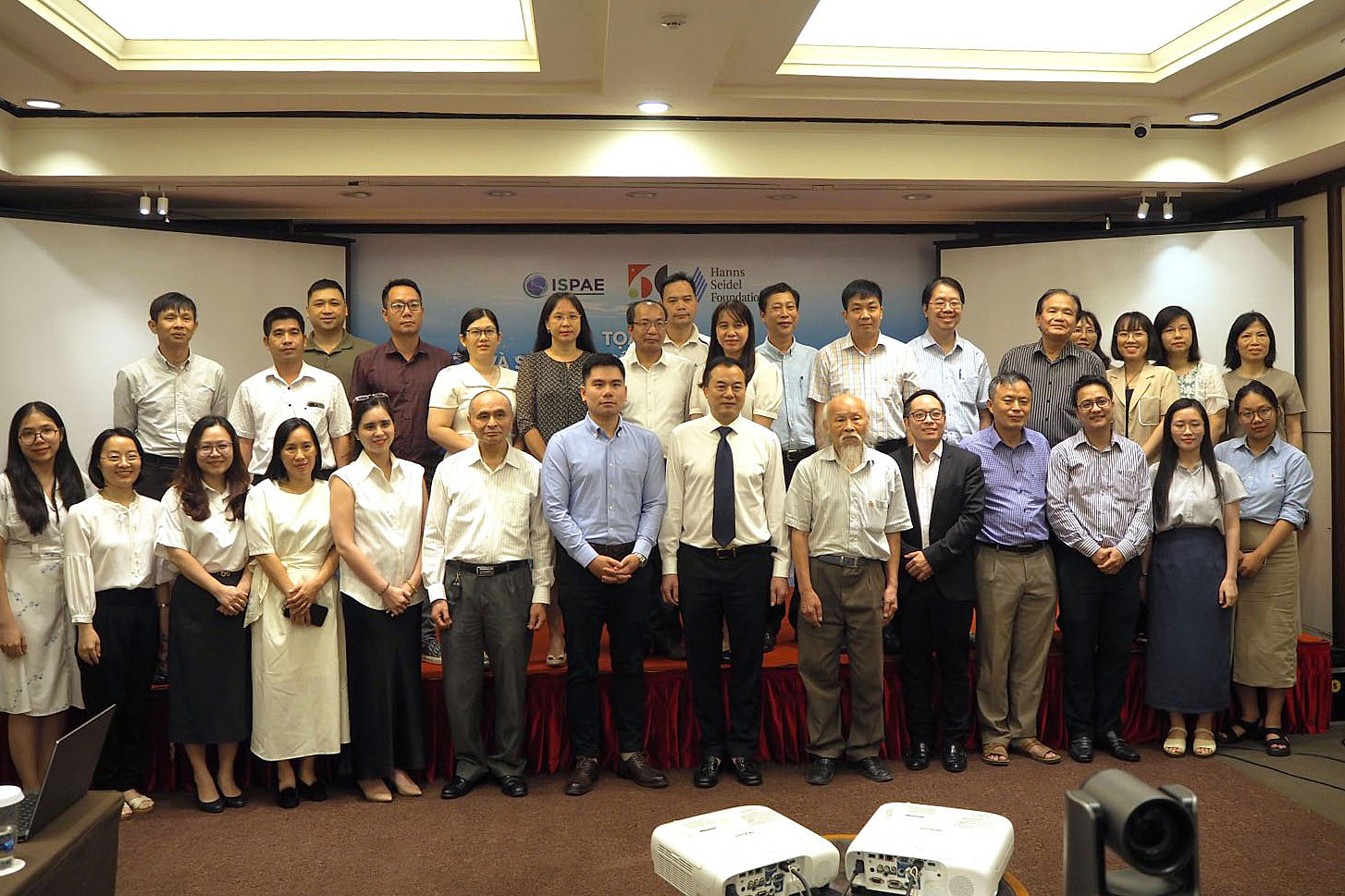
Participants of the workshop are various experts and representatives of government agencies, who are directly involved in negotiation rounds for BBNJ before it is ratified by Vietnam.
HSF
The workshop on the Biodiversity Beyond National Jurisdiction (BBNJ) Agreement, co-organized by the Hanns Seidel Foundation (HSF) and the Institute of Strategy and Policy on Agriculture and Environment (ISPAE), brought together government officials, researchers, and international experts to strengthen understanding of the treaty and discuss Vietnam’s preparation for its future implementation. In the opening session, representatives from both ISPAE and HSF emphasized the growing importance of the BBNJ Agreement within global ocean governance and highlighted the need for dialogue, capacity building, and coordination as Vietnam considers its next steps toward implementation.
The first technical presentation, delivered by Dr. Mahesh Pradhan, Coordinator of The Coordinating Body on the Seas of East Asia (COBSEA), introduced the core pillars of the BBNJ Agreement and explained how the Regional Seas Programme (RSP) can support collaborative approaches to marine biodiversity conservation. His remarks underscored the value of regional cooperation, especially for countries bordering semi-enclosed seas, and helped situate Vietnam’s responsibilities within a broader international context. This was followed by an overview of Vietnam’s marine policy landscape by Assoc. Prof. Dr. Vũ Thanh Ca, who outlined how existing national policies align with the principles of the BBNJ Agreement and identified areas where additional guidance or harmonization may be needed.
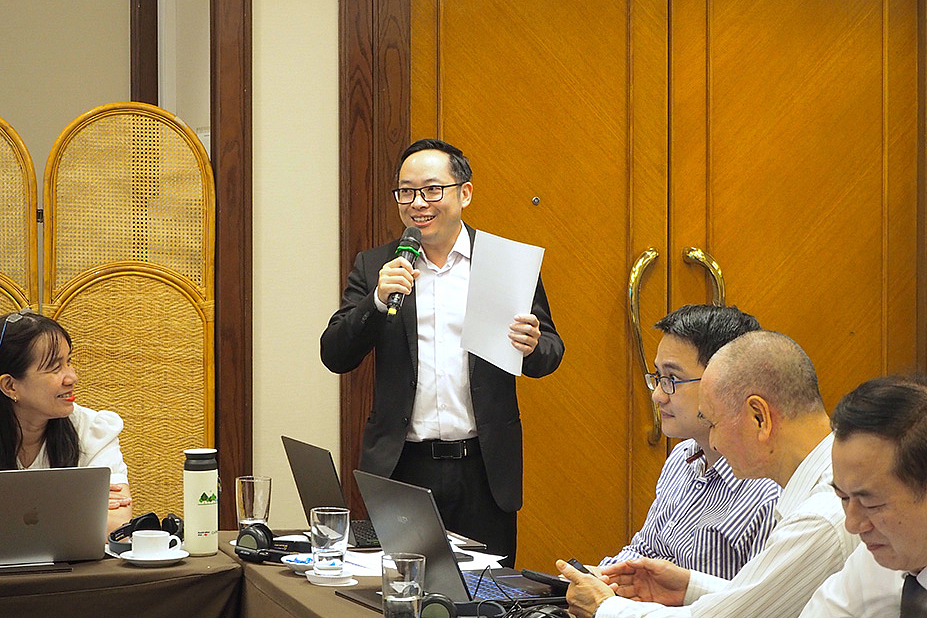
Mr Le Viet Phuong, Ministry of Foreign Affairs, spoke about the negotiations for BBNJ Agreement
HSF
Mr. Lê Viết Phương from the Ministry of Foreign Affairs then provided insights into Vietnam’s role during the negotiation process and shared the initial workplan for preparing Vietnam’s implementation of the Agreement. He highlighted the importance of cross-ministerial collaboration, further research, and structured consultations to ensure that Vietnam is ready to meet the treaty’s requirements. The subsequent Q&A session allowed participants to raise questions on technical definitions, environmental impact assessment procedures, and potential challenges related to monitoring, enforcement, and access to marine genetic resources. The discussion revealed high interest among domestic experts and reinforced the need for clear national-level guidance. After a short tea break, the workshop shifted to global and national legal perspectives.
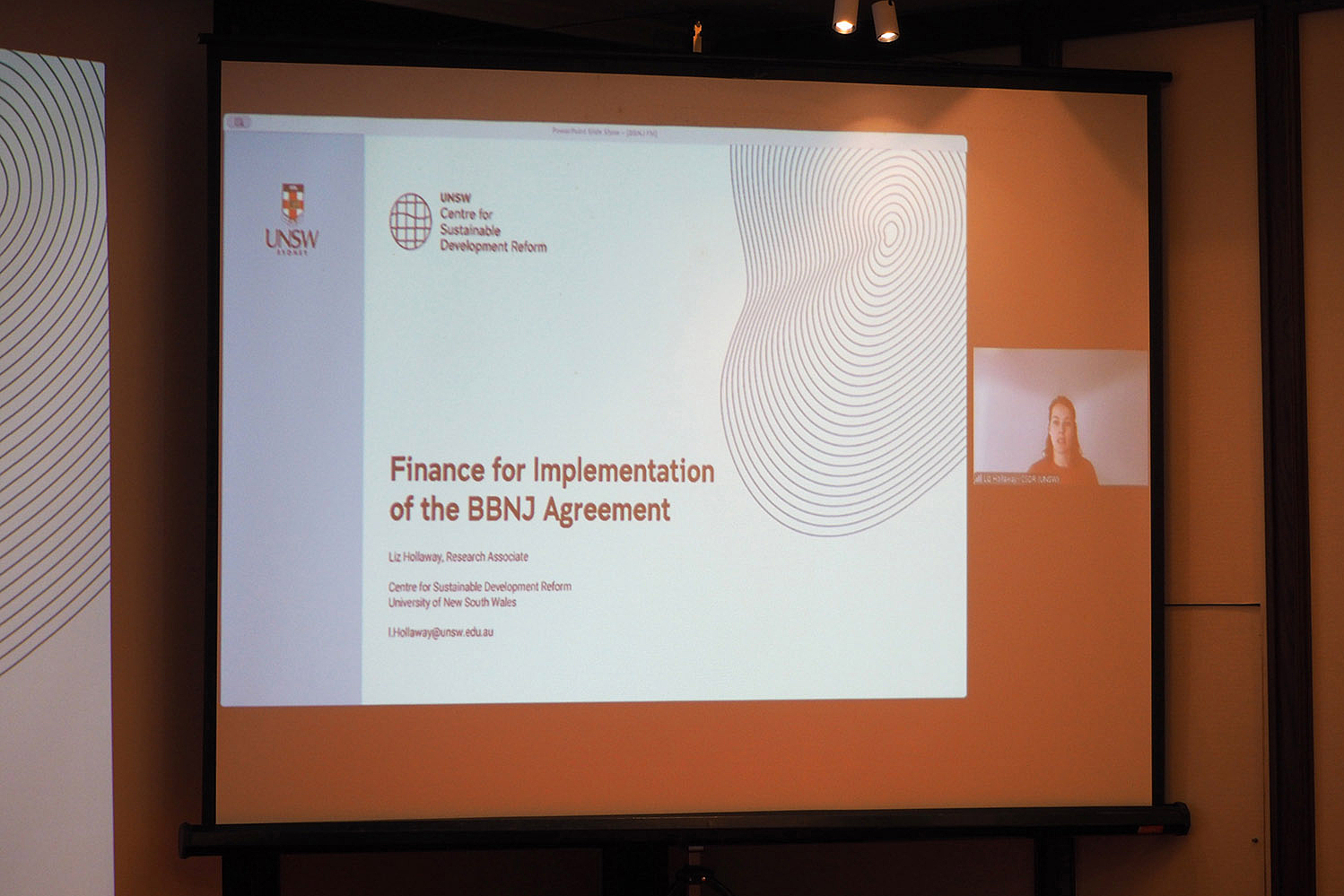
Financing mechanism for BBNJ Agreement
HSF
Dr. Eliza Northrop from the UNSW Centre for Sustainable Development Reform discussed international experiences in promoting BBNJ implementation and highlighted opportunities for Vietnam to engage in global cooperation initiatives, particularly around technology transfer and data sharing. Building on this, Dr. Vũ Hải Đăng from the Diplomatic Academy of Vietnam and Ms. Phạm Thị Gấm from VASI presented detailed assessments of Vietnam’s current marine governance framework. They identified gaps that may need to be addressed—including marine spatial planning tools, biodiversity protection mechanisms, and environmental impact assessment standards—and proposed practical suggestions for aligning domestic legislation, especially the Law on Natural Resources and Environment of Sea and Islands, with the future obligations of the BBNJ Agreement.
Overall, the workshop achieved several key outcomes with the strong facilitation and support of HSF. It enhanced participants’ understanding of the BBNJ Agreement and its implications for Vietnam, clarified national priorities, and identified legal and technical gaps that must be addressed during the implementation phase. The event also strengthened dialogue across ministries, research institutions, and international experts—an approach central to HSF’s mission of promoting cooperative and informed policymaking. By providing a platform for cross-sectoral exchange, the workshop laid important groundwork for effective implementation of the BBNJ Agreement, with HSF committed to continuing its support in this process.