
Muslim Youth Conference
Strengthening the conflict-mediation skills of emerging Muslim Youth Leaders
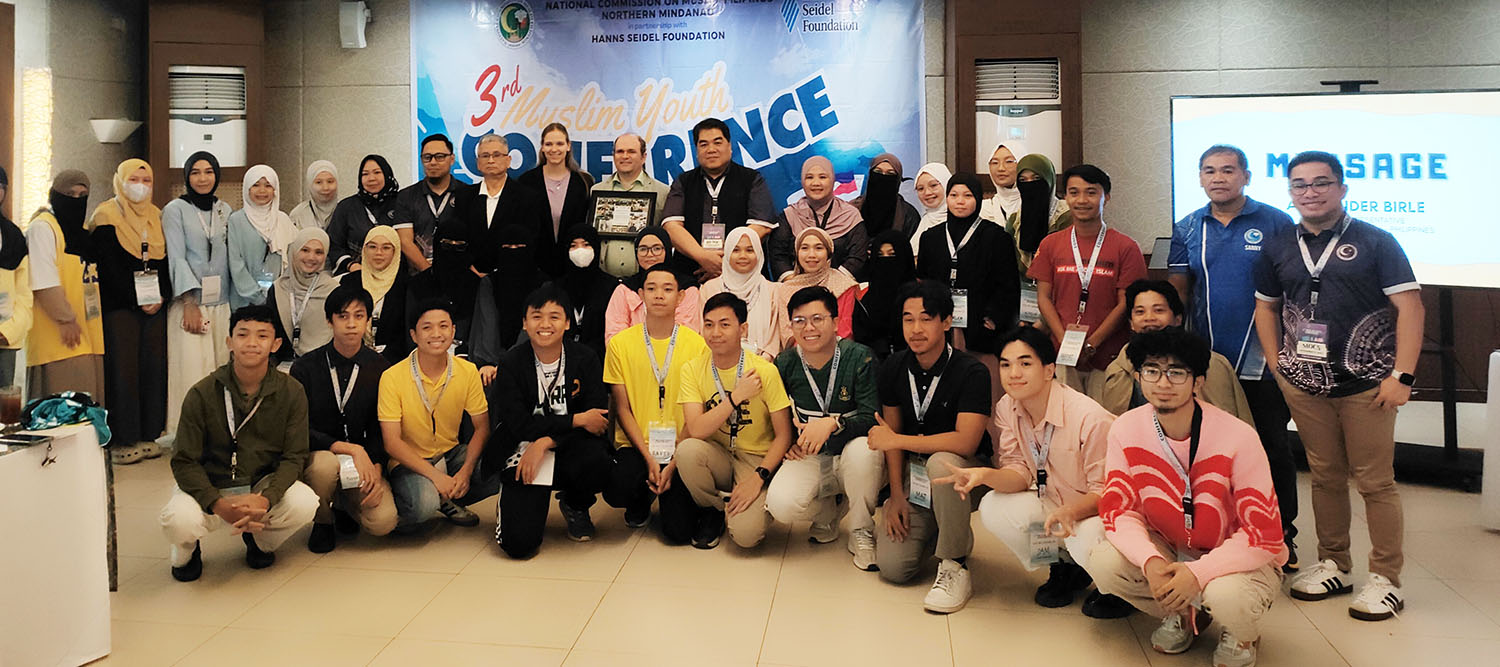
Participants and organizers of the 3rd Muslim Youth Conference
© HSF
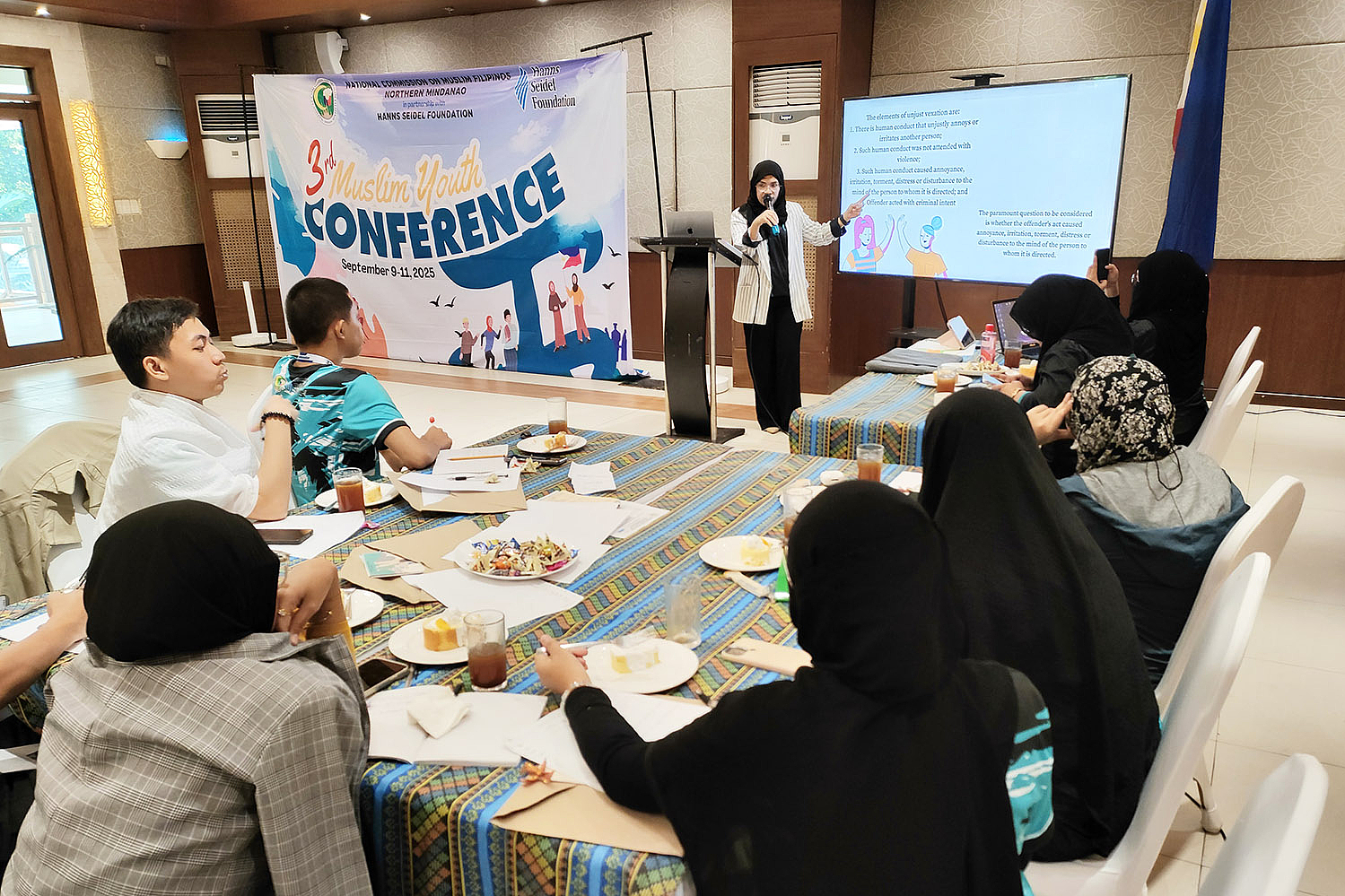
As part of its partnership with the Hanns Seidel Foundation (HSF), the National Commission on Muslim Filipinos (NCMF) Northern Mindanao Regional Office (NCMF-10) raised the vulnerability of youth leaders in Muslim communities who, even with secondary or college-level education, may have less awareness or acceptance for the generally desired and acceptable core values of decency, morality, peaceful mediation/resolution of conflict, and the respect/adherence for the rule of law. Especially in marginalized Muslim communities, the youth will need to be equipped the proper set of values, morals, leadership sand communication skills, and in the modern age, at least a layman’s understanding of basic legal principles applicable to common legal and other problems. In response, HSF Philippines supported the conduct of a "Muslim Youth Conference", which took place from 9 to 11 September 2025. It aimed to strengthen emerging youth by providing them information, insights to, and techniques for conflict-mediation to help resolve community-level conflict. The objectives of the activity were:
© HSF
To equip the participants with the basic knowledge, familiarity, and applicability of personal, social, communication, and leadership skills when interacting with other members of the community, especially when taking on leadership, and decision-making roles;
To add to the participant’s knowledge and understanding of basic, but important legal principles and laws of the Philippines as these apply to conflict mediation training (CMT), and alternative dispute resolution (ADR) methods towards possible mediation and resolution of community-level conflict; and
To make the participants understand that as “emerging” community leaders (of Muslim communities) they have a role in creating and sustaining adherence to law and peace initiatives within their community.
The activity included as its core participants over thirty youth leaders selected from youth, student, and related academic, and Muslim organizations throughout Northern Mindanao. Most of the participants were Maranao. Some of them are still in school (seniors in colleges and heads of student organizations, others are young professionals, the range of participants’ ages ranging from 18 to 24, most of who are in their early 20’s.
© NCMF
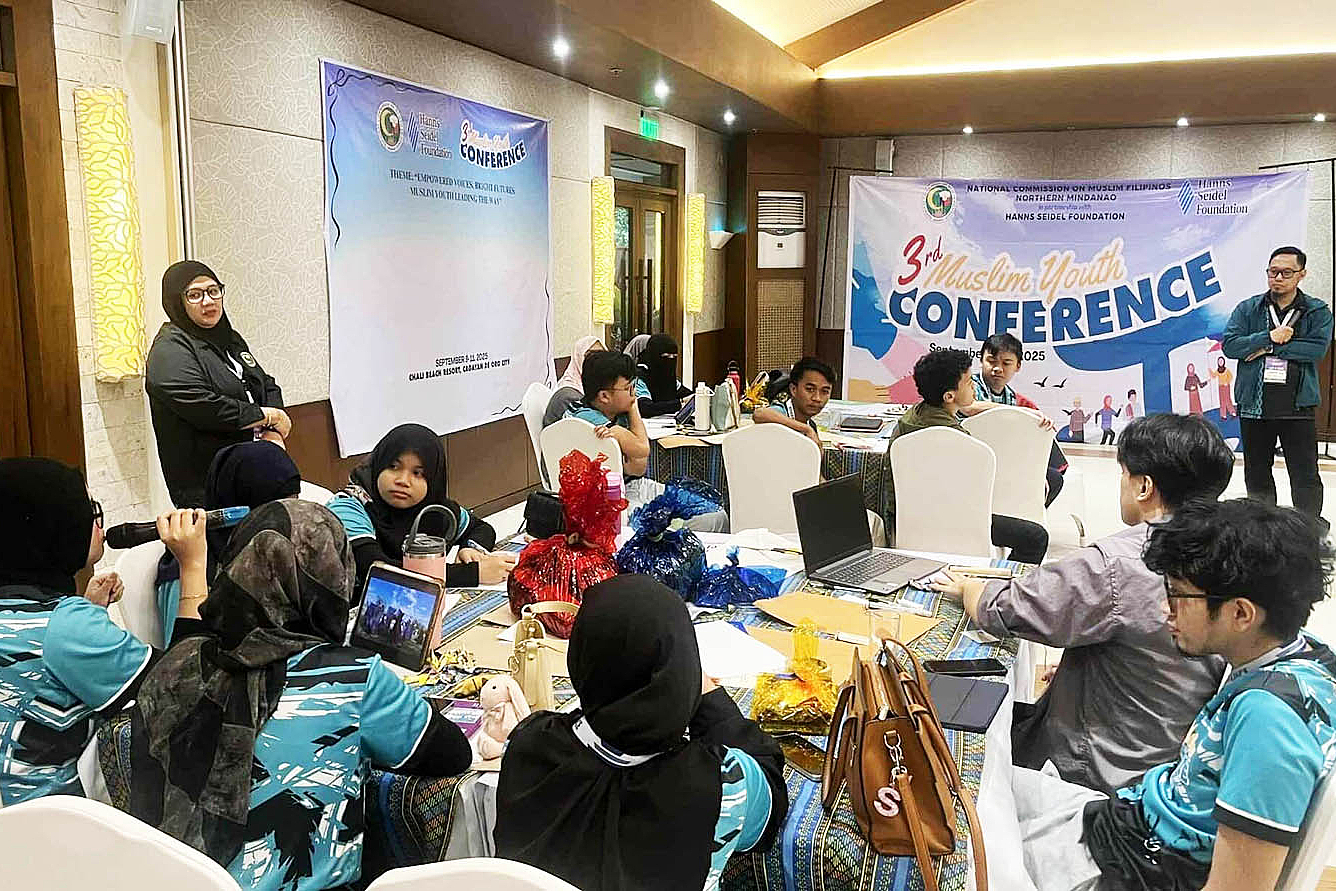
During the conference, participants learned to assess, plan, mobilize, implement, and evaluate activities that will benefit their peers and/or their communities. In addition, through relationships, teamwork, and a “web” of support that develops through the camp experience, participants were tasked to form their own concrete plans to accommodate a growing network of young leaders, using social networking tools or other institutional networks. During the workshop sessions, the participants explored the qualities and attributes of “role models” and youth community leaders and, in the process, examine their personal abilities and goals. In thinking about the kind of people they want to be, they worked collaboratively on team activities that promote their ability to work as a team, become creative thinkers and leaders, and accomplish more than they thought was possible. In addition, the participants may be able to identify the drivers of negative influences, and encourage each other to work together in combating these, avoiding association with negative personalities or groups. Aside from social and communication skills, they should be able to internalize the salient aspects of laws and social standards so that they will avoid trouble with the authorities.
During the post activity assessment, the NCMF shared its expectations that with this activity, the participants, as responsible members of the youth sector, will be more secured and confident of themselves due to the things that they will learn from the activity. In addition, they shall be more inspired of leading their respective communities, organizations and/or associations towards creating and/or developing more peaceful communities.