
HSF Vietnam contributes to Global Road Mapping Process on Circular Economy
Regional Roundtable on Business Models for an Inclusive Circular Economy
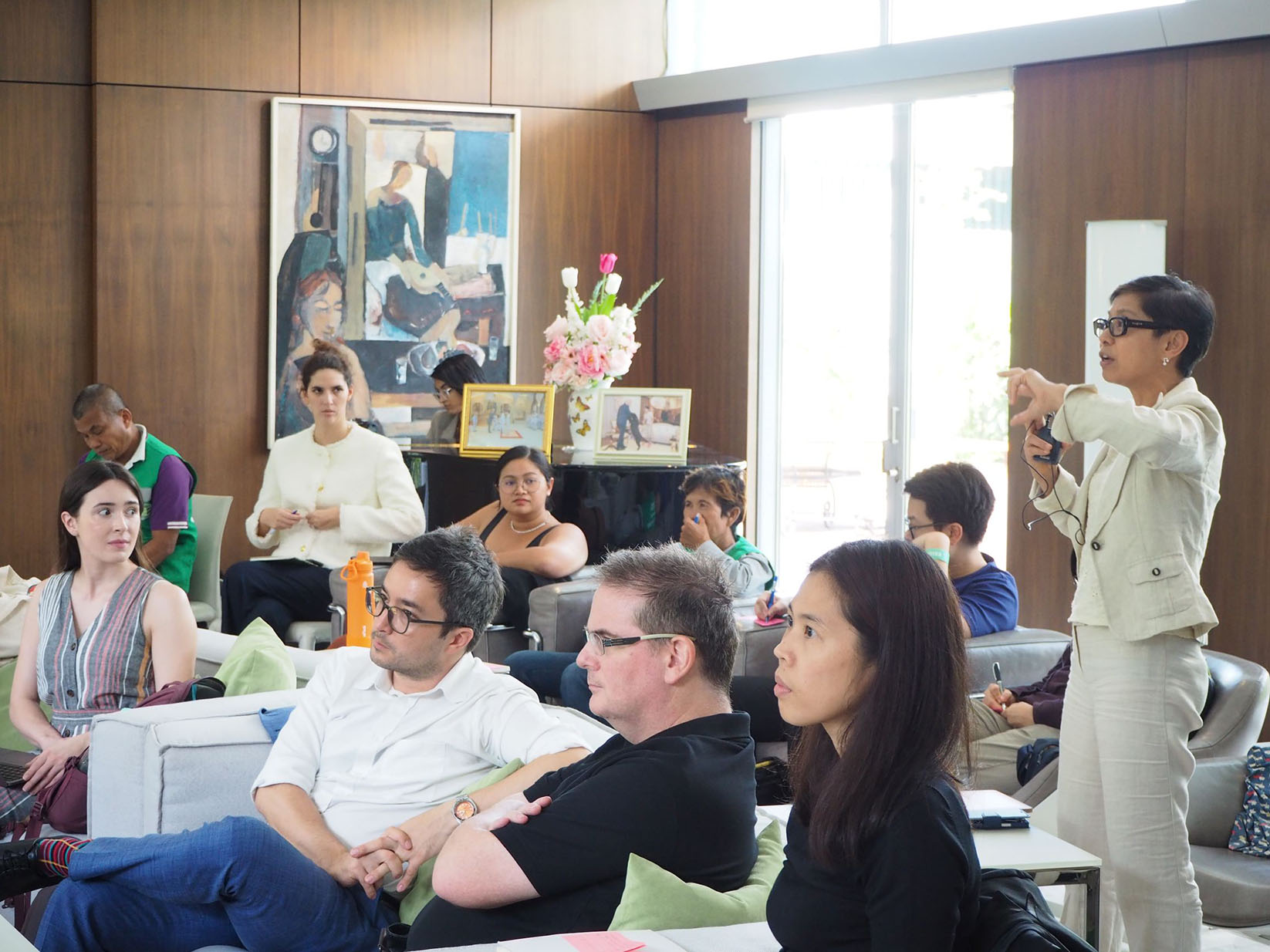
Assoc Prof Lerwen Liu of Nanyang Technological University, Singapore shared with audiences about her experience with inlusive circular business models
HSF
During the roundtable, the roles of inclusive circular business models and circular economy are discussed as economic development strategy and viable pathways to achieving the Sustainable Development Goals (SDGs). Participants underscore the indispensable role of local entrepreneurship, small and medium sized enterprises and context-specific solutions in navigating the journey towards an inclusive circular economy and sustainable development.
Key results of discussion sessions are:
Session 1: Contextualizing Circular Economy & Inclusion in Southeast Asia
Circular economy (CE) in Southeast Asia extends beyond recycling to include material efficiency and producer responsibility for waste management through Extended Producer Responsibility (EPR). For CE to be inclusive, it must benefit society, not just companies. This requires a rights-based approach involving all stakeholders, especially marginalized communities.
Session 2: Stakeholder Mapping
Various organizations in Asia and Europe are supporting inclusive CE models through multistakeholder dialogues. Presentations at the event, including the Circular Economy Innovative Initiative in Textiles (CITE), showed promising collaboration opportunities. However, missing stakeholders include government bodies, financial institutions, and local businesses, whose involvement is crucial for progress.
Session 3: Effective Policies and Regulations
Successful policies include sustainable public procurement, tax exemptions, and financial support for CE practices. Clear definitions and labeling for CE products, incubation programs for entrepreneurs, and inclusive decision-making processes are also essential. Supporting CE startups and SMEs with government action plans is critical.
Session 4: Supporting Base-of-Pyramid Participation
CE initiatives should involve waste pickers and community members to ensure their needs are met. Programs like trading waste for services and decentralizing recycling through national recycling banks can empower informal sectors. Policies should protect waste pickers from increased costs and offer subsidies and education. In agriculture, supporting smallholder farmers in organic transitions is crucial, with ethical middlemen connecting them to consumers.
These feedbacks will be used on the policy paper “Circular Economy Solutions”, developed as part of the “Global Roadmap for an Inclusive Circular Economy” initiative spearheaded by Chatham House in cooperation with multiple international partners. This initiative seeks to consolidate disparate national circular economy roadmap efforts, happening in over 60 countries worldwide. The initiative aims to present a cohesive framework through the establishment of a unified vision and actionable pathways for international cooperation in the areas of policy, trade and finance.