
Women role in implementing circular economy
Enhancing women’s role in the circular economy: from policy to practice
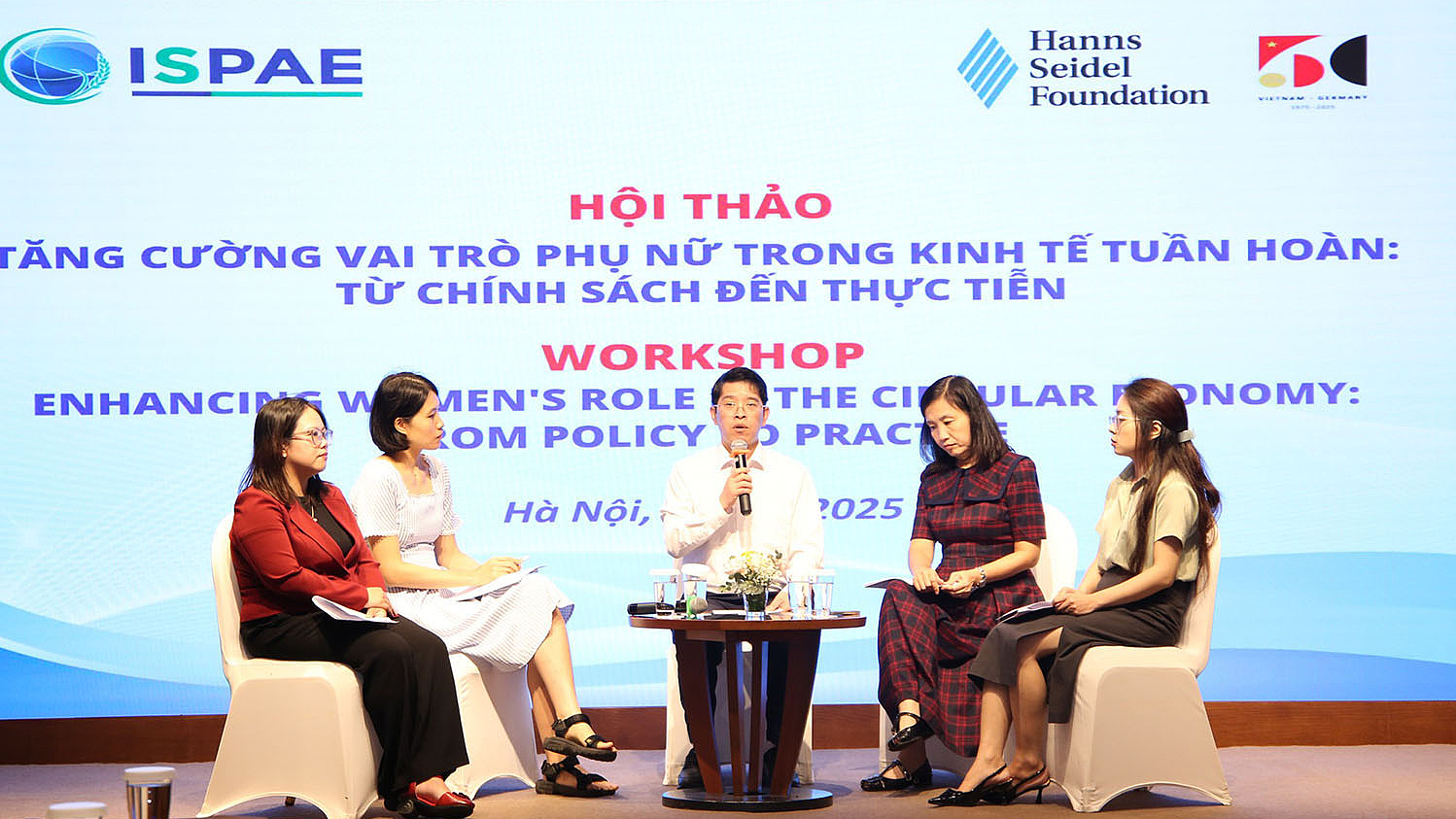
Panel session on women role in implementing circular economy
HSF
The workshop “Enhancing Women’s Role in the Circular Economy: From Policy to Practice” took place on October 16, 2025, in Ha Noi, brought together representatives from government agencies, the Viet Nam Women’s Union, universities, research institutes, technology enterprises, and social organizations. This diverse participation created a rich, multi-stakeholder dialogue, reaffirming that the circular economy is not only a technical agenda but also a social one—deeply connected to community engagement and gender equality. Throughout the sessions, speakers underscored that women should not be seen merely as “household waste managers” but as policy partners and social actors capable of leading transformative change.
One of the main highlights of the workshop was the strong recognition of women’s pivotal role in driving circular economy initiatives. Ms. Nguyen Phuong Hoa from the Viet Nam Women’s Union showcased successful grassroots movements such as the “Green House,” “Five Nos, Three Cleans,” and “Women Against Plastic Waste” campaigns. These examples demonstrated how women across Viet Nam have turned environmental actions into organized community movements that generate both ecological and social benefits.
Another key highlight was the introduction of innovative technological models for municipal solid waste management. Ms. Tran Thi Thoa presented the mGreen digital platform, noting that more than 70% of its users are women. The platform shows that when supported with digital tools, women can play a leading role not only in waste segregation but also in the digitalization of secondary resource management. She also emphasized the need for sustainable incentive mechanisms—such as reward points, private sector sponsorships, and partnerships with environmental funds—to maintain and scale such digital solutions.
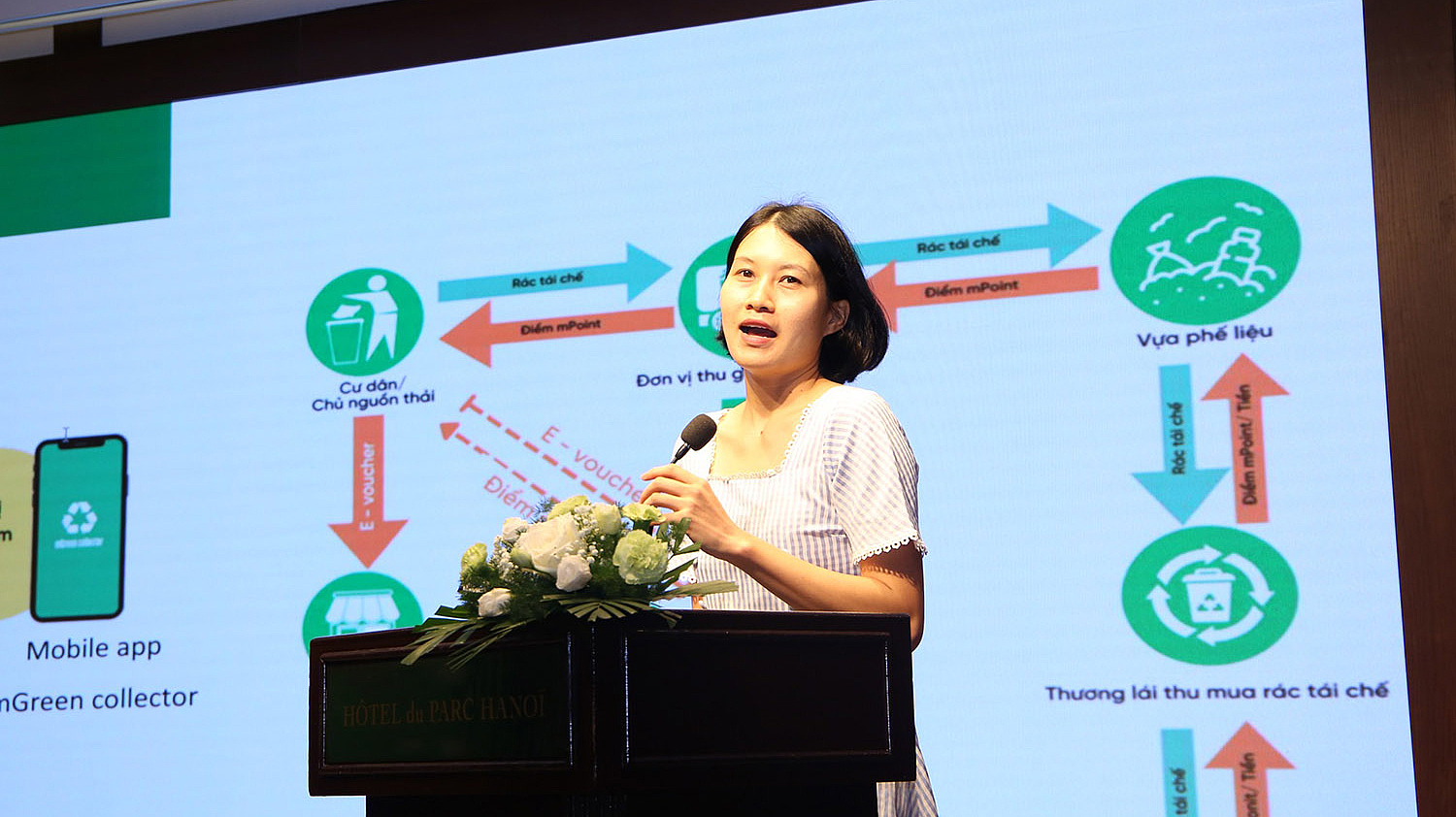
Ms Tran Thi Thoa, Director of mGreen, presented their digital service that manage solid waste treatment
HSF
The workshop also shed light on the contributions and vulnerabilities of women working in the informal waste collection sector. In her presentation, Ms. Doan Vu Thao Ly from the Center for Environment and Community Research (CECR) highlighted that although informal collectors contribute up to 60% of Viet Nam’s recyclable materials, they remain largely excluded from policies and lack access to labor protections. The discussion emphasized that, if effectively implemented, the Extended Producer Responsibility (EPR) mechanism could elevate female waste pickers from informal laborers to recognized and equitable actors within the recycling value chain. Proposals such as establishing women-led, technology-based cooperatives and developing a national database of informal waste workers were viewed as practical next steps to support this transition.
During the open discussion, participants stressed the potential of the “pay-as-you-throw” model to operationalize the “polluter pays” principle and encourage behavioral change, thereby reducing pressure on public budgets. However, they also noted the need for careful implementation, especially in apartment complexes. Ms. Tran Thi Thu Hien shared that the Department of Environment is currently developing technical guidelines on calculating waste collection and treatment fees based on weight or volume—an important foundation for local authorities moving forward. Participants also highlighted the importance of developing financial support mechanisms for waste collectors, particularly women in the informal sector, to prevent inequities during the transition to new waste management systems.
In closing, Mr. Le Anh Vu of HSF Vietnam stressed that the workshop’s insights will be consolidated into concrete recommendations, including policy solutions and pilot models that strengthen women’s participation in the circular economy. The workshop reinforced a clear message: building a circular economy in Viet Nam requires more than technology and regulation—it must also empower the women who, often behind the scenes, shape daily consumption habits, drive household waste segregation, and sustain community recycling efforts. Their leadership is essential to accelerating Viet Nam’s transition toward a more inclusive and sustainable circular economy.