
Community-based Dialogues Project (CBD)
Community-Based Dialogue on Protecting the Youth of Cordillera
HSF
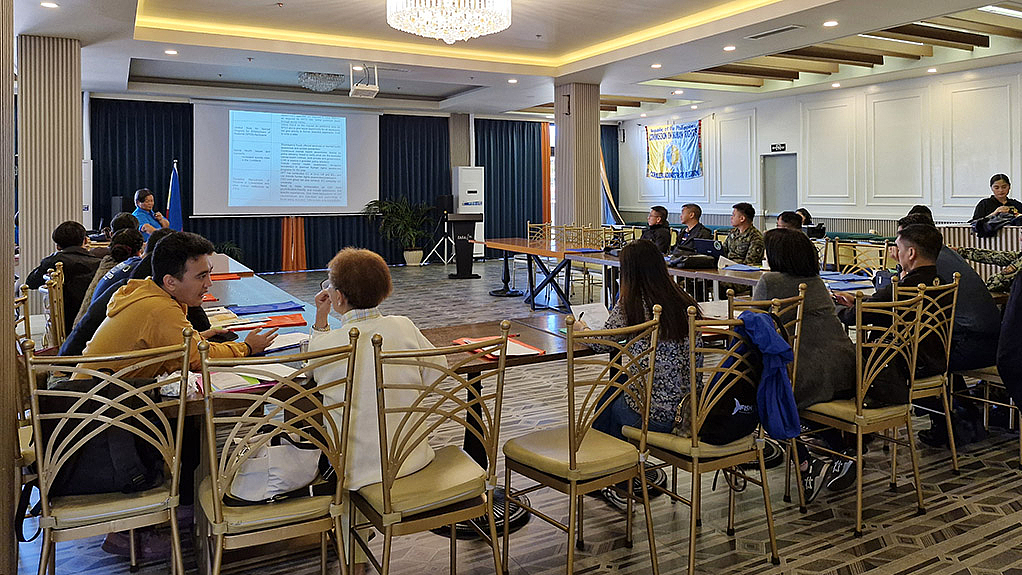
It was attended by more than 30 participants comprising of youth group representatives from Baguio City and La Trinidad, Benguet; officers and staff of the CHR-CAR led by its Regional Director, Atty. Romel Daguimol; civil society organizations (CSOs); Local Government Units (LGUs); officers and personnel of the Armed Forces of the Philippines-Philippine Army (AFP-PA) Baguio Task Force, and the Police Regional Office Cordillera (PROCOR)-Regional Human Rights Affairs Office (RHRAO); and representatives from the Hanns Seidel Foundation/Germany (HSF).
The CSO’s and local communities present were: Igorot Global Organization-Philippines (IGO-Ph), IGOROTA Foundation, La Trinidad Indigenous Peoples Organization, Junior Chamber International – BLISTT, and Dive into Youth.
HSF
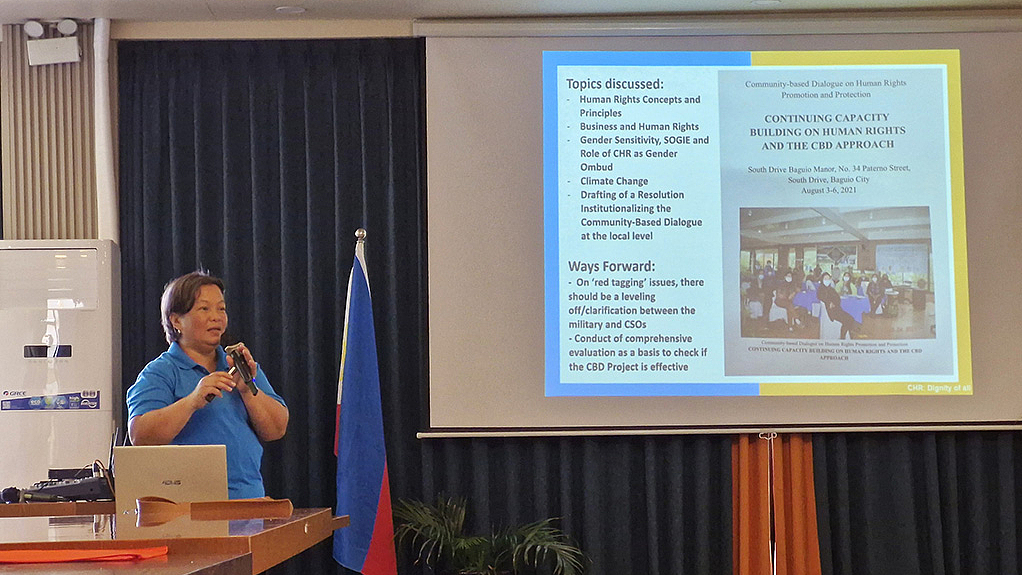
After a round of self-introduction of participants, Ms. Marlyn Palangdao, Training Specialist of CHR-CAR presented an overview of the CBD project- goals, objectives, partners, activities, and accomplishments especially in the Cordillera region. The Community-Based Dialogue (CBD) Project has identified several pressing human rights issues and challenges that require attention and collaborative efforts from various stakeholders. These concerns highlight the complexities of human rights protection and the need for continuous dialogue and policy development.
• Presence of police in schools.
• Refusal of other CSOs to participate/cooperate in the conduct of CBD.
• Alleged harassment cases against uniformed personnel filed by CSOs.
• Alleged human rights violations committed by uniformed personnel (alleged red tagging, elicit relationship between military personnel assigned in the area and minors);
• Deceptive recruitment of CTGs in schools.
• Issue on FPIC process (land dispute, CALT/CADT processing, issuance of title).
• VAWC cases against children and youth in the region.
• Mental health issues in the region.
This year 2025, the CBD CAR Core group plans to conduct the following CBD activities: (1) Revisit Pasil, Kalinga to monitor assess the past CBD activity; (2) Information Education Campaign (IEC) on CBD and Human Rights with the newly elected officials to include the HRAC and RoL program in their priorities and (3) Capacity Building for CBD CAR Core Group.
HSF
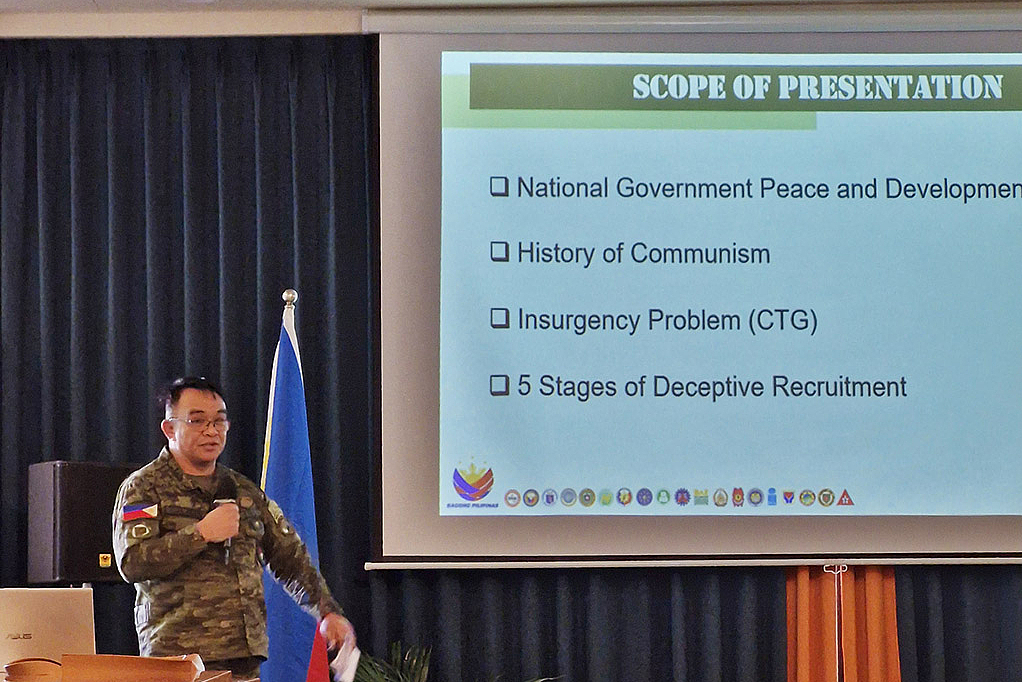
Technical Sergeant George Calatan of the Joint Task Unit – Panagkaykaysa delivered a comprehensive and thought-provoking presentation on prevailing security challenges and ongoing strategic initiatives. His in-depth discussion provided valuable insights into the complex dynamics influencing peace and national stability.
A key highlight of Sgt. Calatan’s presentation focused on the deceptive recruitment methods employed by Communist Terrorist Groups (CTGs), particularly targeting the youth. He detailed the Five Stages of Deceptive Recruitment, a systematic process designed to gradually indoctrinate individuals—especially students—into the ranks of insurgent movements. This recruitment strategy manipulates ideological narratives and exploits social grievances to transform unsuspecting students into radical activists and, ultimately, into full-fledged members of extremist organizations. Sgt. Calatan emphasized the critical need for heightened awareness and proactive countermeasures to disrupt these recruitment efforts. He underscored the importance of strengthening the educational system as a frontline defense—empowering students with knowledge, critical thinking skills, and resilience against ideological manipulation.
In conclusion, Sgt. Calatan called for a unified, multi-sectoral approach to counter deceptive strategies. He affirmed that the protection of vulnerable individuals, particularly the youth, demands the active involvement of parents, educators, security agencies, and civil society organizations. Through collective action to educate, inform, and support at-risk communities, society can effectively safeguard future generations from extremist influence—contributing to lasting peace, security, and national resilience.
HSF
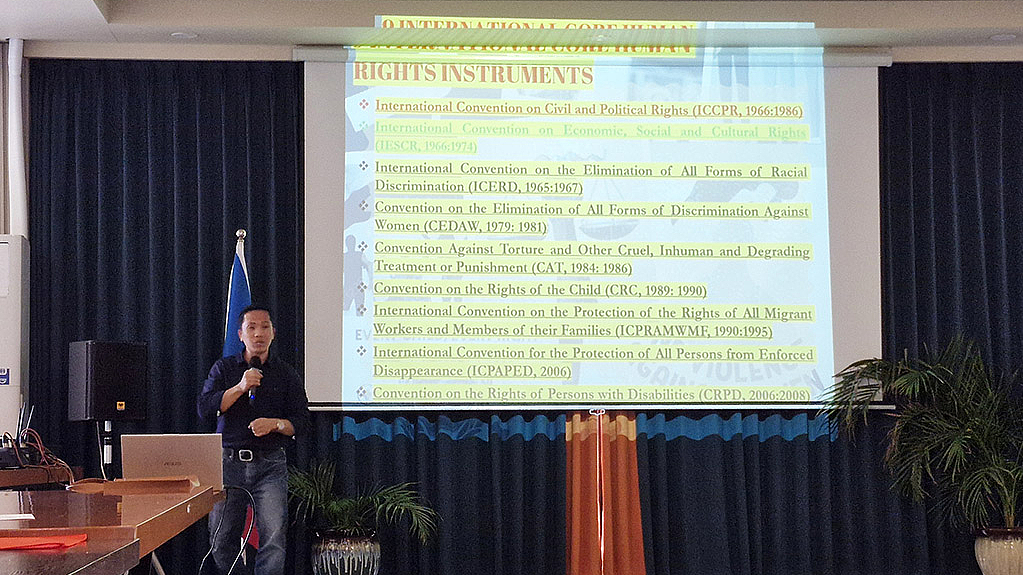
Atty. Lyndon Morales, Attorney V and Head of the Legal Division of CHR-CAR, delivered a compelling presentation on “Human Rights Concepts and Principles.” In his discussion, Atty. Morales provided a comprehensive overview of the historical evolution of human rights, framing it within the broader context of international peacebuilding and good governance. He underscored the idea that human rights are synonymous with human needs, serving as essential guarantees for human dignity and survival.
Atty. Morales highlighted two core principles central to human rights governance: public service—which compels governments to uphold their responsibilities to citizens—and the rule of law, which ensures justice and accountability within a rights-based governance framework. He emphasized that human rights encompass a wide array of concerns and that many governmental failures can be traced back to unmet obligations in this area. In conclusion, Atty. Morales reinforced the notion that justice is truly realized when governments are committed to the effective implementation and protection of human rights, thereby promoting equity and safeguarding the well-being of all individuals.
To conclude the day’s activities, Ms. Charmain Joy Batong-Ambros facilitated the session on “Ways Forward and Commitment Setting.” The discussion resulted in several actionable agreements, considered feasible in the near term with the support of the CBD core group. One key proposal was to initiate a collaboration between the AFP Joint Task Unit and the Department of Education. The objective is to enable the AFP to conduct presentations in schools on human rights, with particular focus on addressing the recruitment efforts of CTGs within educational institutions. The group also discussed the potential integration of these awareness initiatives into the school curriculum.
HSF survey questionnaires were distributed to, accomplished by and collected from the participants.
Atty. Romel Daguimol, Regional Director of CHR-CAR, delivered a heartfelt closing message, extending sincere gratitude to all stakeholders, participants, and the Hanns Seidel Foundation for their invaluable support. He emphasized that the activity served as a meaningful platform to discuss pressing human rights issues impacting the youth sector in the Cordillera region. His remarks reaffirmed the CHR’s commitment to sustained engagement, education, and collective action—underscoring the importance of collaboration across all sectors in building a more inclusive and just society.