Community-Based Dialogue (CBD) Session in Antique
CBD Strengthens Action for Ati Community’s Ancestral Domain and Land Security
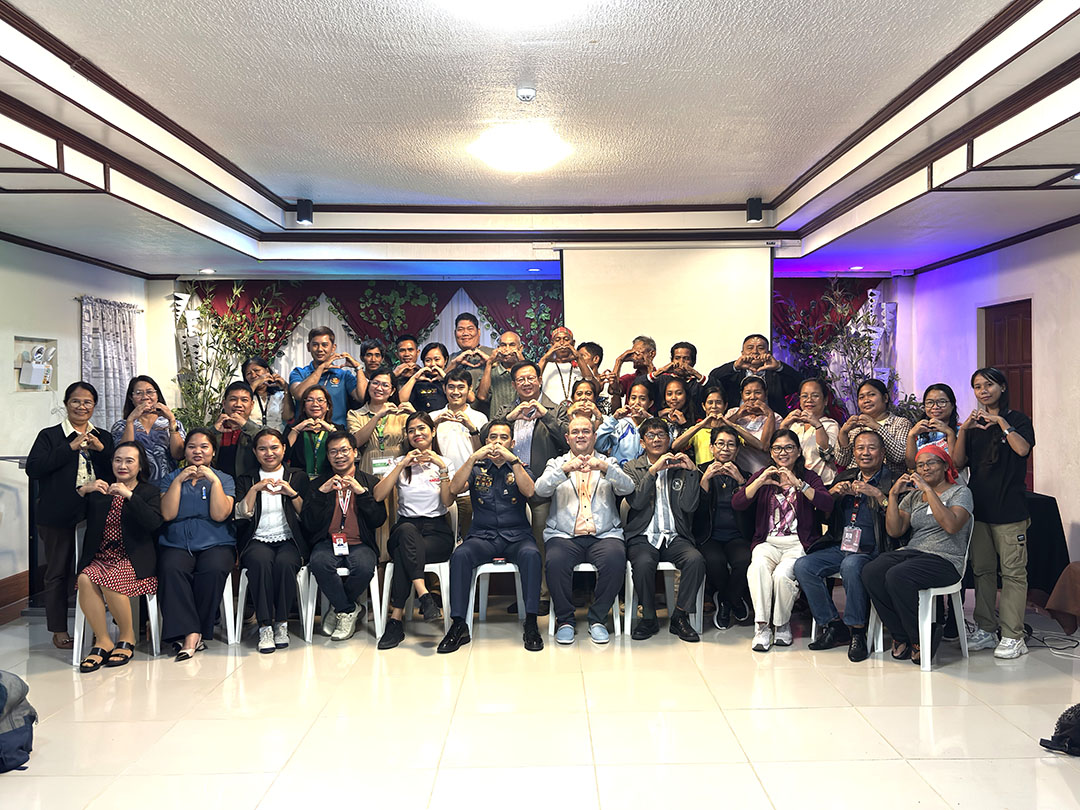
Group photo with all the participants
PROCESS Foundation
The one-day face-to-face dialogue brought together representatives of the Ati community, the National Commission on Indigenous Peoples (NCIP), local government units, the Department of Environment and Natural Resources (DENR), other relevant government agencies, civil society organizations, and legal and land rights advocates.
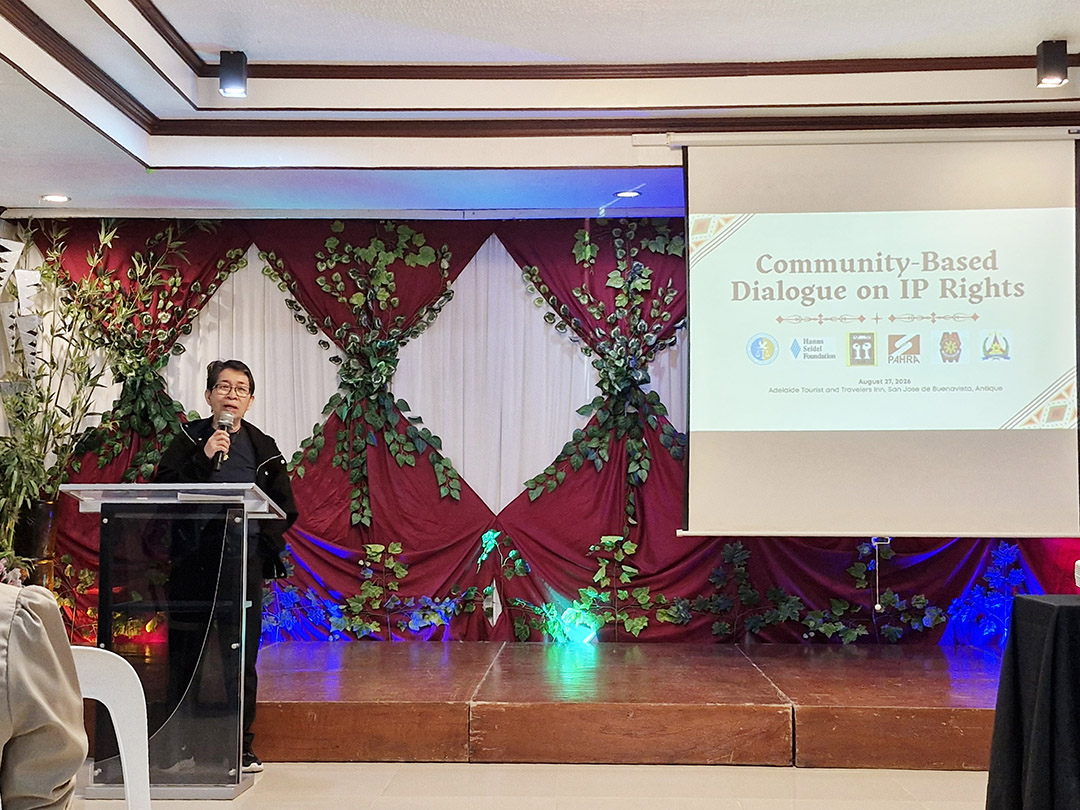
The activity formed part of the Thematic Monitoring of the Ati Community in Hamtic, Antique on Rights to Ancestral Domain and Land Security, a priority human rights initiative of the CHR Reg. VI.
Who Are the Ati?
The Ati are one of the Indigenous Peoples of the Philippines and are among the Indigenous Cultural Communities historically associated with Panay Island. Ati communities have long-standing connections to the lands and natural resources that sustain their way of life.
For the Ati community, ancestral domain is more than land. It is closely connected to their collective identity, culture, history, traditional knowledge, spirituality, livelihoods, and the future of succeeding generations. The protection of ancestral domain is therefore essential not only to land security but also to the preservation and continuity of their cultural identity and way of life.
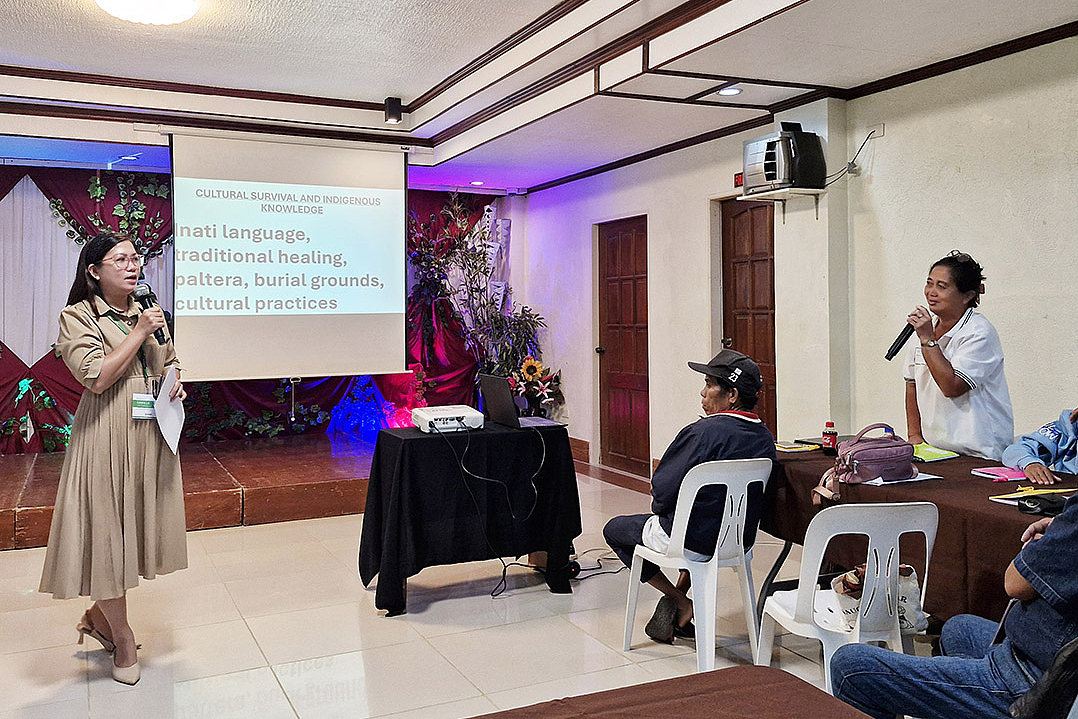
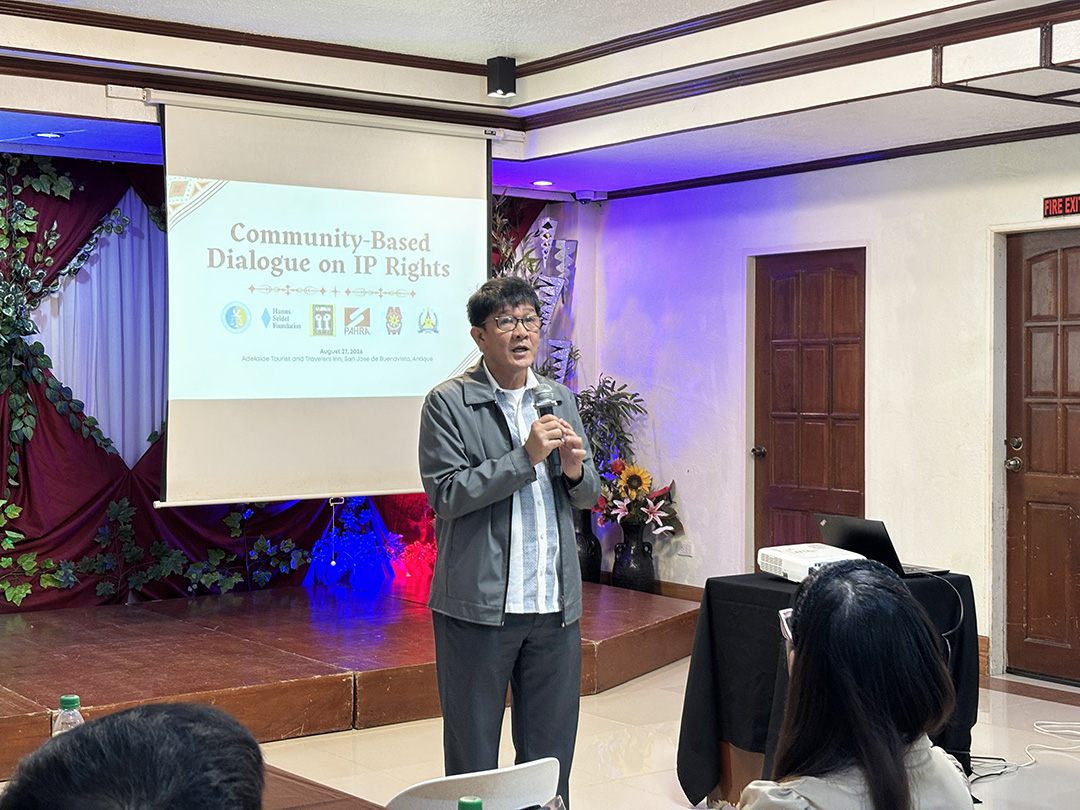
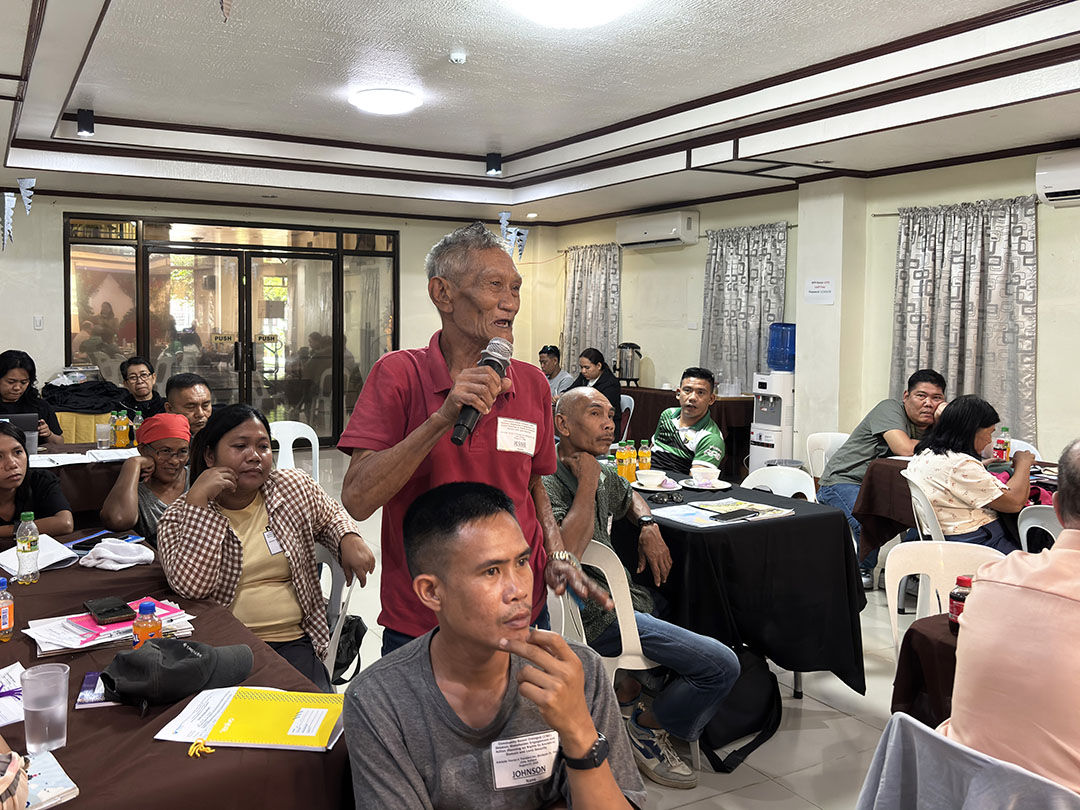
Community members freely raised questions during the open discussion
HSF
A Dialogue Grounded in Community Voices
The CBD provided a participatory and culturally sensitive platform for members of the Ati community to share their experiences and raise concerns directly with relevant government representatives and other stakeholders.
During the open discussion, community members raised questions relating to ancestral domain processes, land security, government support, cultural protection, livelihood, environmental concerns, and other issues affecting their community.
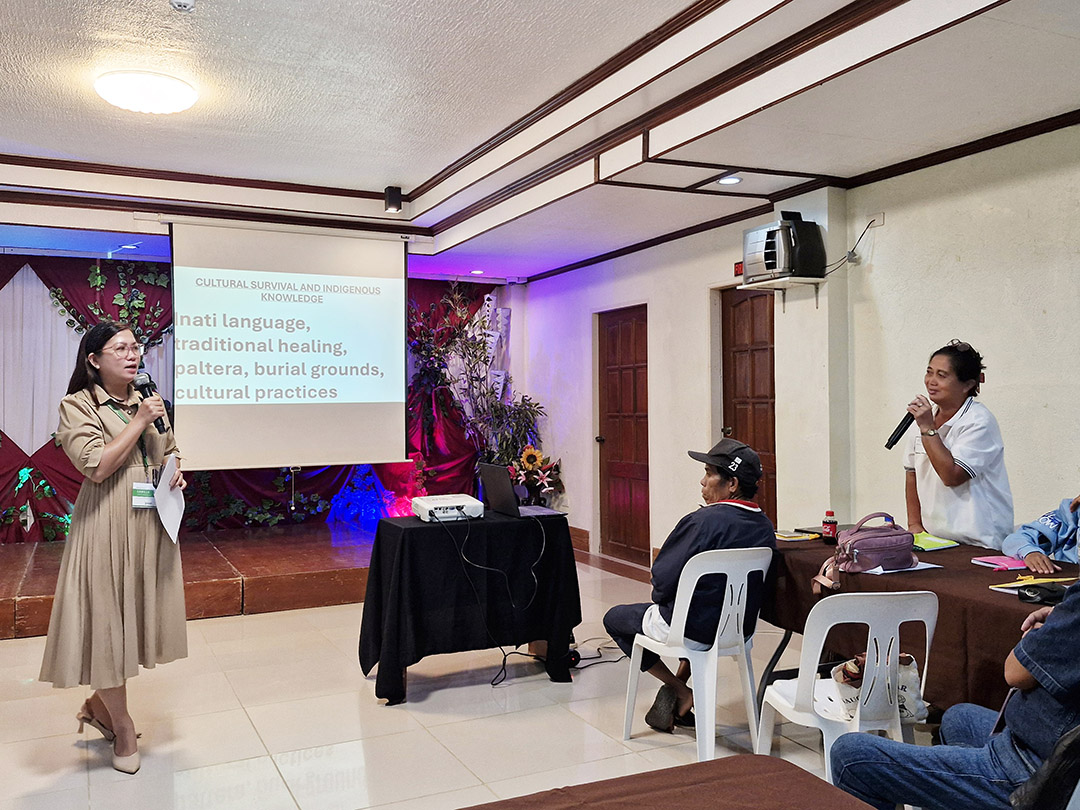
Government representatives responded to and clarified the concerns raised by the Ati community, providing information on relevant institutional mandates, government processes, and available avenues for support. The exchange enabled the community’s questions and concerns to be sufficiently addressed while also strengthening mutual understanding between rights-holders and duty-bearers.
The dialogue likewise identified issues that require continued coordination and follow-through among concerned institutions and stakeholders.
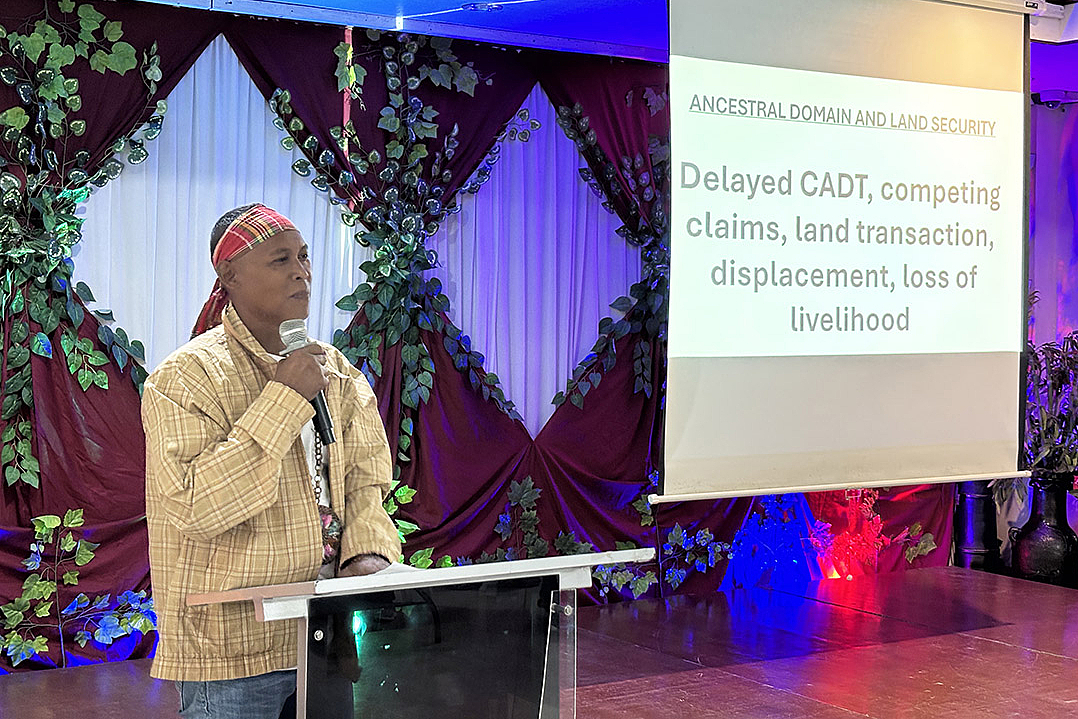
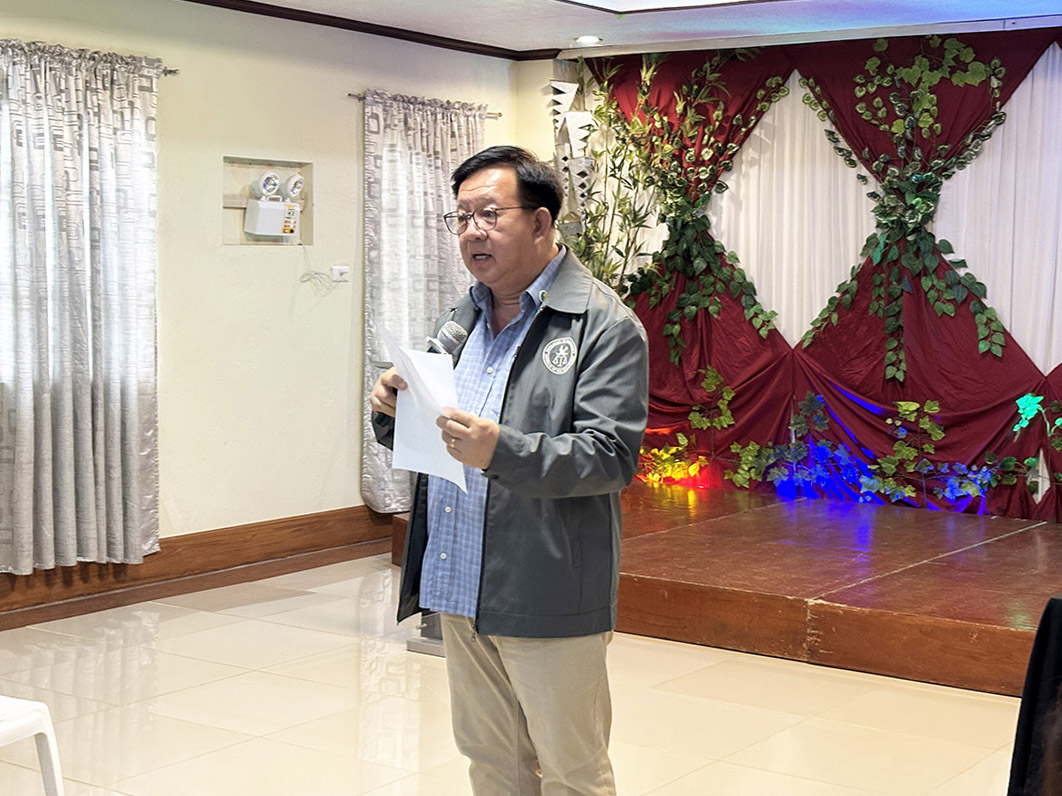
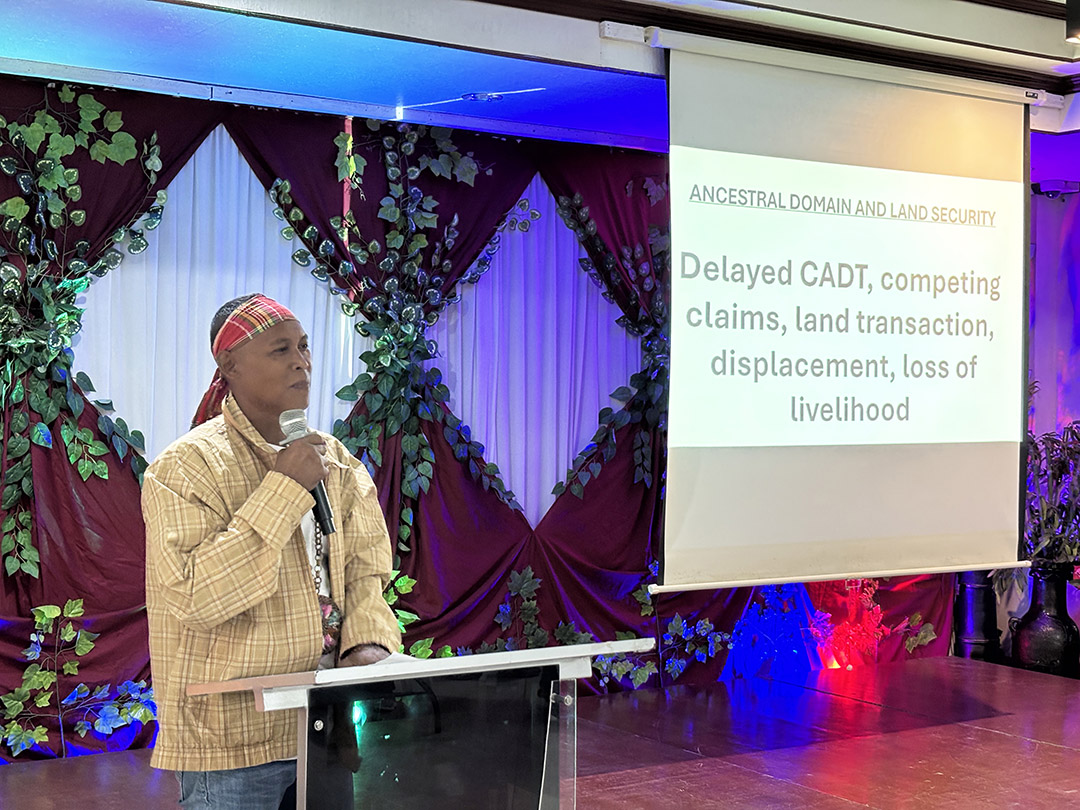
Mr. Joven Francisco delivered his presentation
PROCESS Foundation
Ancestral Domain: Connected to Their Future
A presentation was delivered by Mr. Joven Francisco, a representative from the Ati community, emphasized the central importance of ancestral domain to Indigenous Peoples and highlighted its connection to the Ati community’s identity, culture, livelihood, and future.
The discussion also addressed the continuing challenges surrounding the processing and recognition of Certificates of Ancestral Domain Title (CADT), including the lengthy and multi-stage procedures involved. The roles of the NCIP as the principal government agency responsible for Indigenous Peoples’ rights and ancestral domain processes, as well as the DENR in providing relevant technical and institutional support, were also discussed.
Key Concerns Raised
Among the issues consolidated during the dialogue were concerns relating to delayed CADT processing, competing land claims, land transactions, displacement, and loss of livelihood.
Participants also raised concerns regarding limited awareness of Indigenous Peoples’ rights and legal processes, discrimination and stereotyping, and the need to protect the Inati language, traditional healing practices, burial grounds, and other cultural traditions.
Environmental concerns were likewise discussed, including the proposed landfill, possible water contamination, and the broader need to protect the environmental integrity of the ancestral domain.
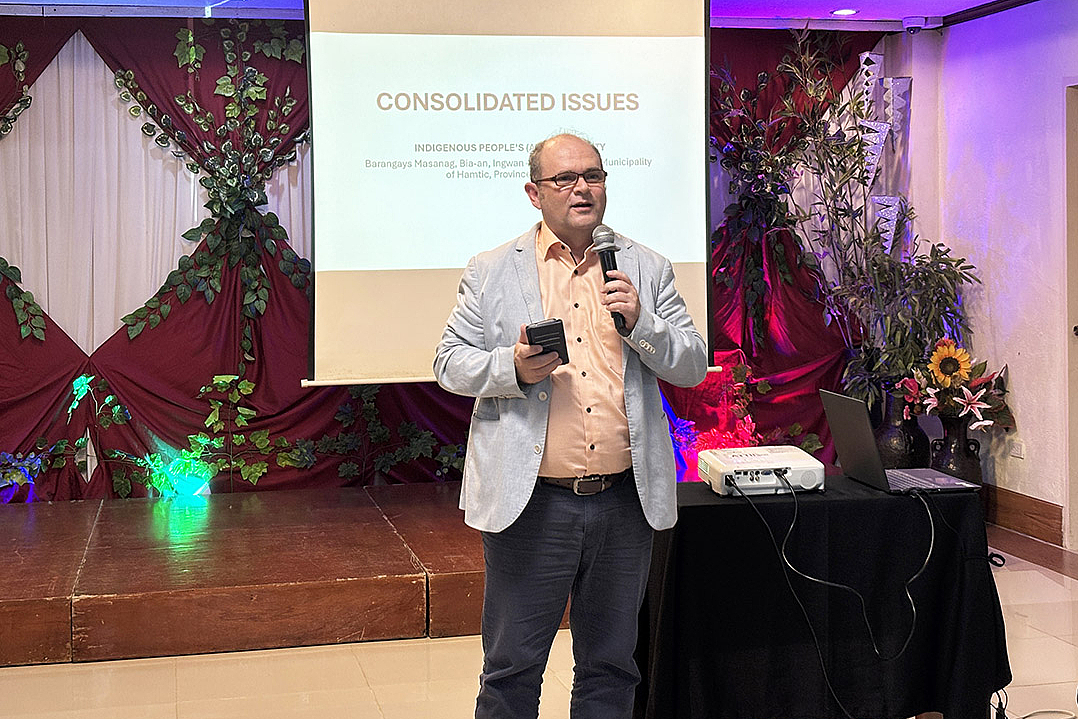
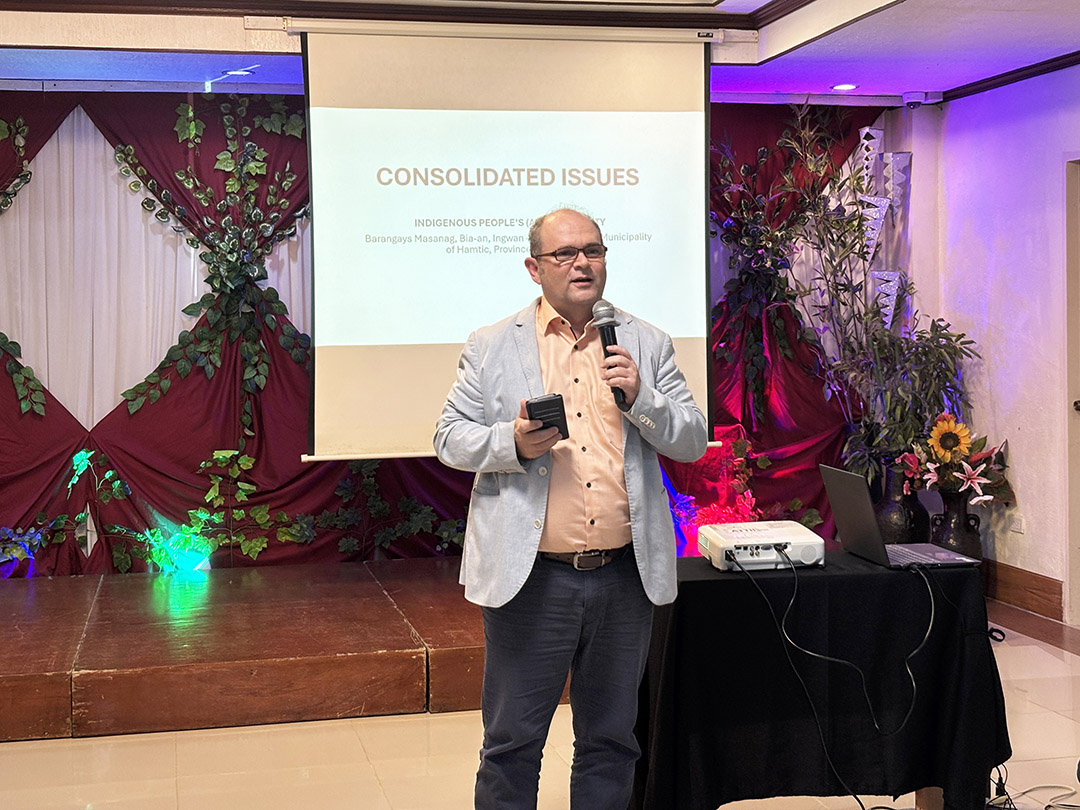
Mr. Alexander Birle, Resident Representative of HSF Philippines, shared his response and message
PROCESS Foundation
From Dialogue to Action
Beyond the discussion of concerns, the activity created an opportunity for stakeholders to identify areas for collaborative action and institutional coordination.
The dialogue helped:
- Identify key institutional concerns, priority interventions, and opportunities for collaborative action;
- Consolidate major issues affecting the Ati community for further action planning and advocacy; and
- Generate important inputs toward the development of a practical and collaborative Multi-Stakeholder Action Plan on Ancestral Domain Protection and Land Security.
The consolidated issues and recommendations from the Community-Based Dialogue will serve as important inputs for the succeeding phase of the initiative, including the development of a community-informed Multi-Stakeholder Action Plan and a community-endorsed Resolution for advocacy and submission to concerned government agencies and decision-makers.
Through this initiative, the Commission on Human Rights Regional Office VI continues to promote Community-Based Dialogue as a practical mechanism for strengthening participation, institutional collaboration, and shared accountability. By bringing rights-holders and duty-bearers together in constructive dialogue, the initiative seeks to transform community concerns into coordinated action while advancing the Ati community’s rights to ancestral domain, land security, cultural identity, environmental integrity, and social justice.
Photo Gallery