
Community-based Dialogues Project (CBD)
CBD-CAR Core Group Orientation and Planning
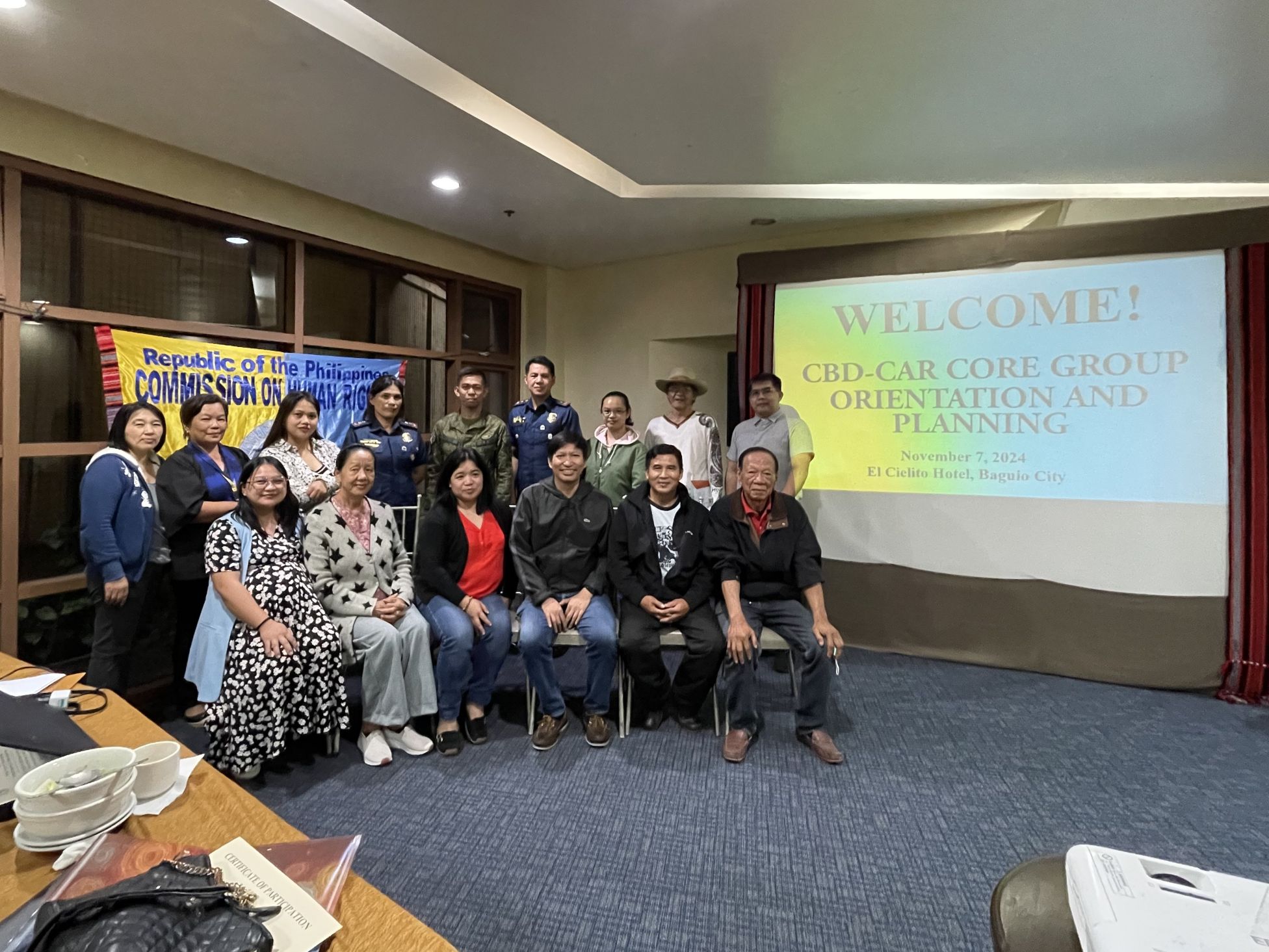
HSF
The objectives were to: (i) gather and reactivate the CBD CAR Core Group to be re-oriented with the objective/s of the group; (ii) identify human rights issues that need to be addressed; and (iii) come up with a plan for the CBD for the year 2025.
Mr. A. Birle delivered the Welcome Remarks. He expressed his appreciation to be able to participate in the activity. He acknowledged the importance of the core group in sustaining the community-based dialogue (CBD) in the region, noting the long-term implementation of the project since 2008. He mentioned the CBD’s unique role in promoting the active partnership between the government, in particular the security sector, and civil society, with the CHR serving as conduit, in identifying and addressing issues on human rights promotion and protection. He underscored the CBD allows the opportunity to reach the grassroots and engage with the communities and together resolve human rights issues. He said that despite the progress that has been made in the human rights situation in recent years, there are still challenges that require joint efforts to find sustainable solutions for every stakeholder/community involved. He called on the importance of raising awareness and appreciation for the CBD as a mechanism for improving the human rights situation on the ground and building mutual trust between and among stakeholders. He enjoined the core group to come together and strengthen working relations through their active participation in the dialogue.
In his Opening Remarks, Atty. R. Daguimol said that the activity will discuss the region’s plans and its implementation moving forward to 2025. He recalled the formation of the CAR core group in 2013/2014 and some of the accomplishments through the years. He underscored the fostering of the relationship between the uniformed agencies and CSOs enabled the CBD core group to be a working group together with some support groups like the Human Rights Action Centers, specifically in Baguio City and La Trinidad. He noted that human rights do not only revolve around civil and political rights, but also economic, social and cultural rights to include the effects of climate change. He hoped that through the CBD, the core group will foster closer partnership including with the AFP and PNP. He acknowledged the group’s contributions to the CBD is vital which promotes open communication between the citizenry and the government particularly with the uniformed personnel so that the full respect for human rights is realized. He thanked HSF for its continued support to the CBD in the region.
Ms. Marlyn Palangdao of CHR-CAR gave an overview of the CBD. She discussed the beginnings of the project, its goals, objectives, partners, challenges and milestones of the CBD including accomplishments in the Cordillera region. She mentioned the CBD is currently in its institutionalization/localization phase. She shared the different CBDs conducted in the region from 2021 to the present that covered the following topics: human rights concepts and principles, business and human rights, gender sensitivity/SOGIE and the role of CHR as Gender Ombud, climate change, red-tagging, human rights issues of the youth, enactment of human rights ordinances, and assessment and planning. Lastly, she mentioned the members of the CBD CAR core group from the government and CSOs, viz: AFP – 503rd and 702 Brigade, 5th Infantry Division, Philippine Army; PNP – Police Regional Office Human Rights Affairs Office (PROCOR HRAO); LGU – Baguio City and La Trinidad, Benguet; National Commission on Indigenous Peoples (NCIP); Peoples Organization for Social Transformation; Shamayim’s Touch Care Group; Igorot Global Organization Philippines; and Tebtebba Foundation.
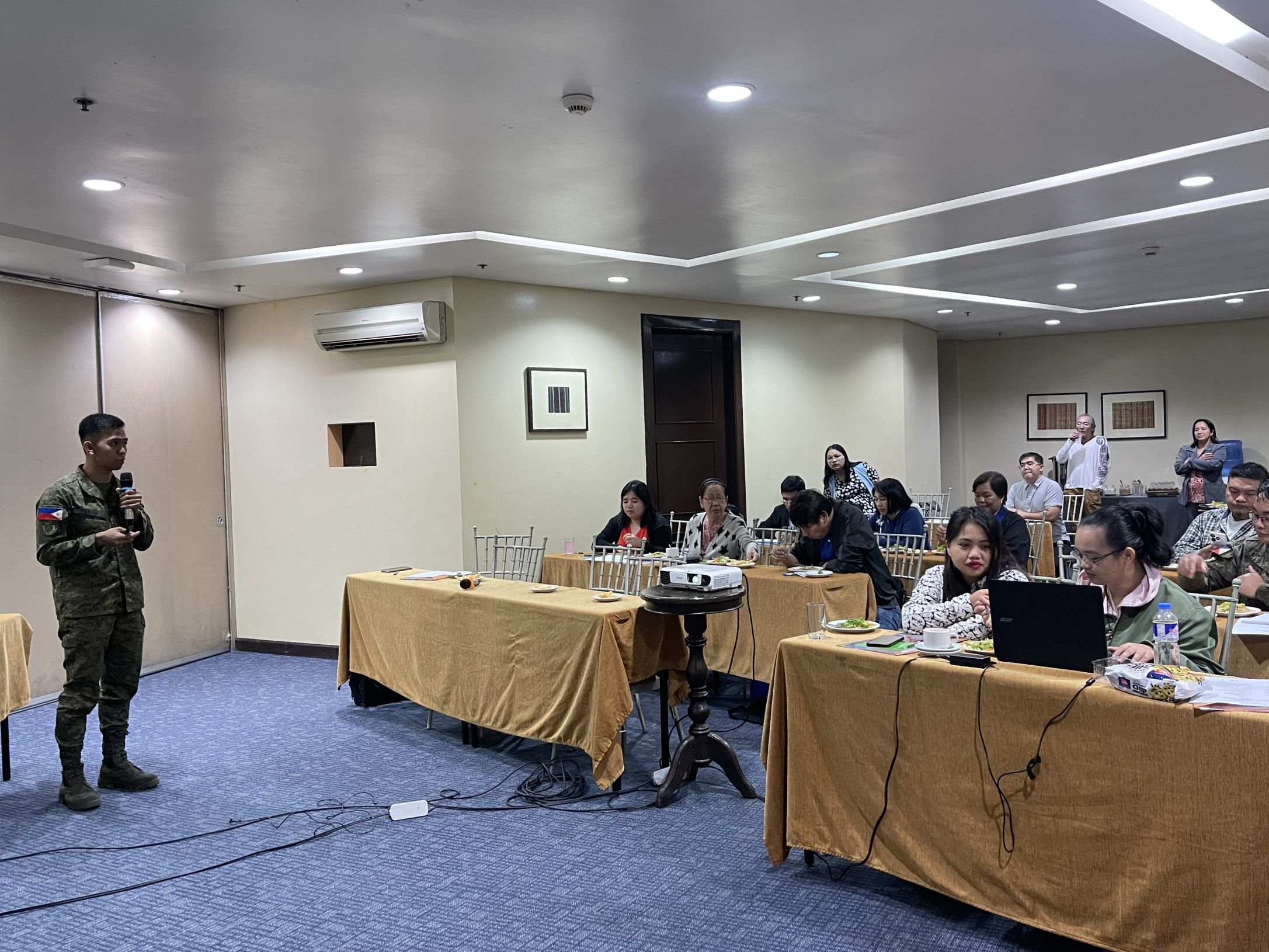
HSF
The AFP presented its Joint Community Defense and Development Support Task Unit ‘JTU Panagkaykaysa’ – Baguio City Convergence for Peace, Prosperity and Unity for Territorial Defense and Integrity. He shared the objective of the JTU which is to inform and educate the local populace of Baguio City regarding threats (internal/external) to national security through the conduct of information, education and communication (IEC) activities specifically in the barangays and schools. Internal threats include local/communist terrorist groups, criminality (illegal drugs, cybercrime, organized criminal syndicates, tribal disputes), economic and social threats (economic sabotage, smuggling, hoarding, profiteering). External security threats are connected to the issue of the West Philippine Sea/overlapping maritime claims, regional (Korean Peninsula, Ukraine-Russia, proliferation of weapons of mass destruction), and strategic security issues (climate change, technological advancement, COVID 19). He introduced the Baguio City Collective Threat Response Initiative project which aims to capacitate the locals to develop a ‘culture of security’ towards helping address the threats. It aims to enhance the city’s resilience against various threats (natural disasters, public health emergencies and security challenges through a proactive way of reporting and monitoring.
During the Assessment of the CBD from 2021 to the present, the participants discussed the human rights issues/challenges in the region, local responses to address these issues including the outcome/results, and recommendations for future action. The group also proposed its CBD plans for 2025.
After the Closing Program, the group gathered for a photo opportunity for documentation purposes.