
Financial Investigation Masterclass
Advanced Financial Investigation Training Deepens Expertise in Complex Crimes
HSF
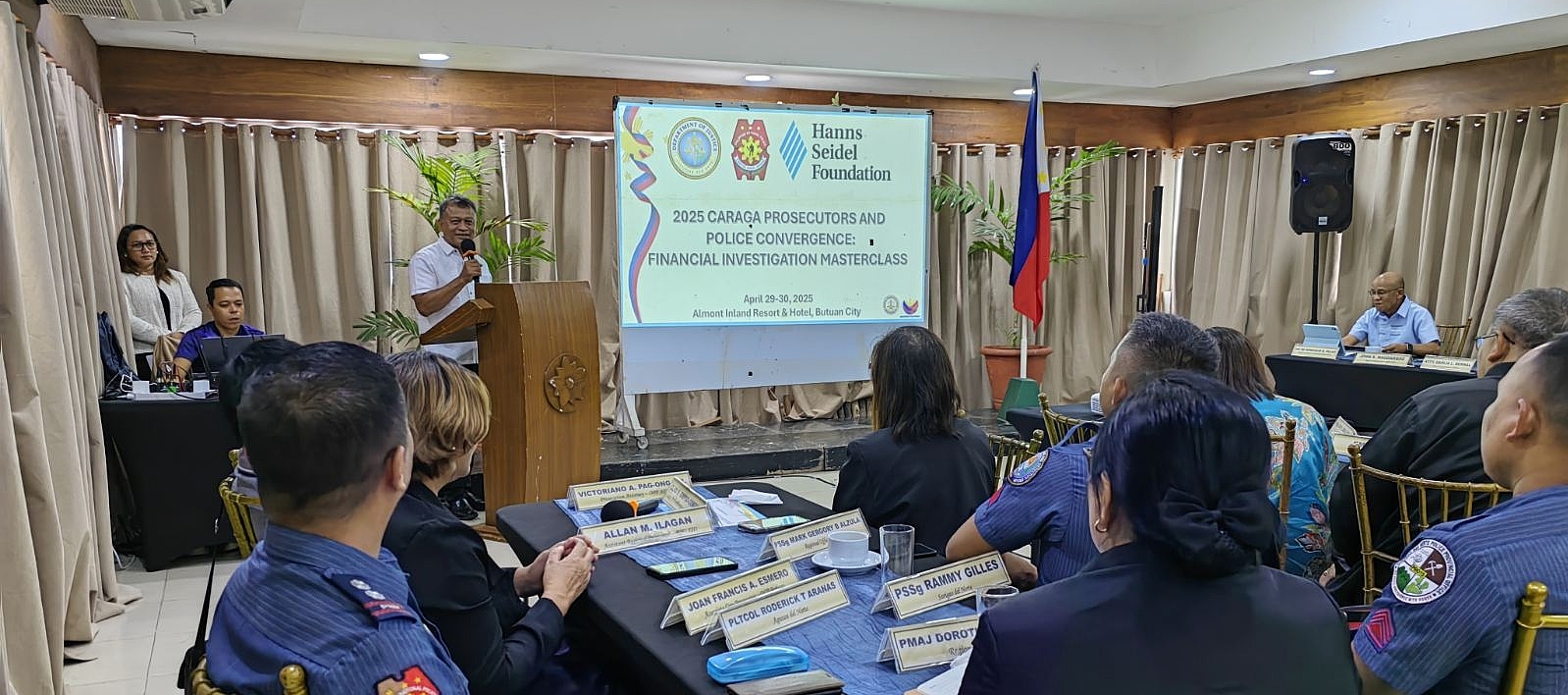
Forty-seven prosecutors and law enforcement officers from the Caraga Region, all members of the Caraga Regional Anti-Money Laundering and Anti-Terrorism Financing Task Force (CRAMLATF), gathered in April for the “Caraga Prosecutors and Police Convergence: Financial Investigation Masterclass.” The resource persons included experienced trainers from within the task force as well as from regional law enforcement counterparts.
Building on the foundational skills developed during the earlier convergence held in March, this masterclass provided advanced training to deepen participants’ expertise in tackling complex financial crimes. Through focused legal reviews, interactive focus group discussions, and collaborative workshops, the activity equipped attendees with updated skills and strategies to address emerging trends in money laundering, terrorism financing, human trafficking, and environmental offenses --strengthening regional coordination and prosecution efforts against unlawful financial activities.
This activity was vital to enhancing the region’s capacity to combat complex financial crimes. By highlighting current trends in financial criminality and their links to terrorism, human trafficking, and environmental offenses, the training provided essential tools and knowledge for an effective response. It also cultivated a solid understanding of pertinent legal frameworks, essential for sound and robust prosecution. More importantly, the activity focused on refining investigative strategies and methodologies, enabling participants to more effectively detect, investigate, and prosecute these intricate offenses. This contributed to a more coordinated and impactful enforcement effort.
HSF
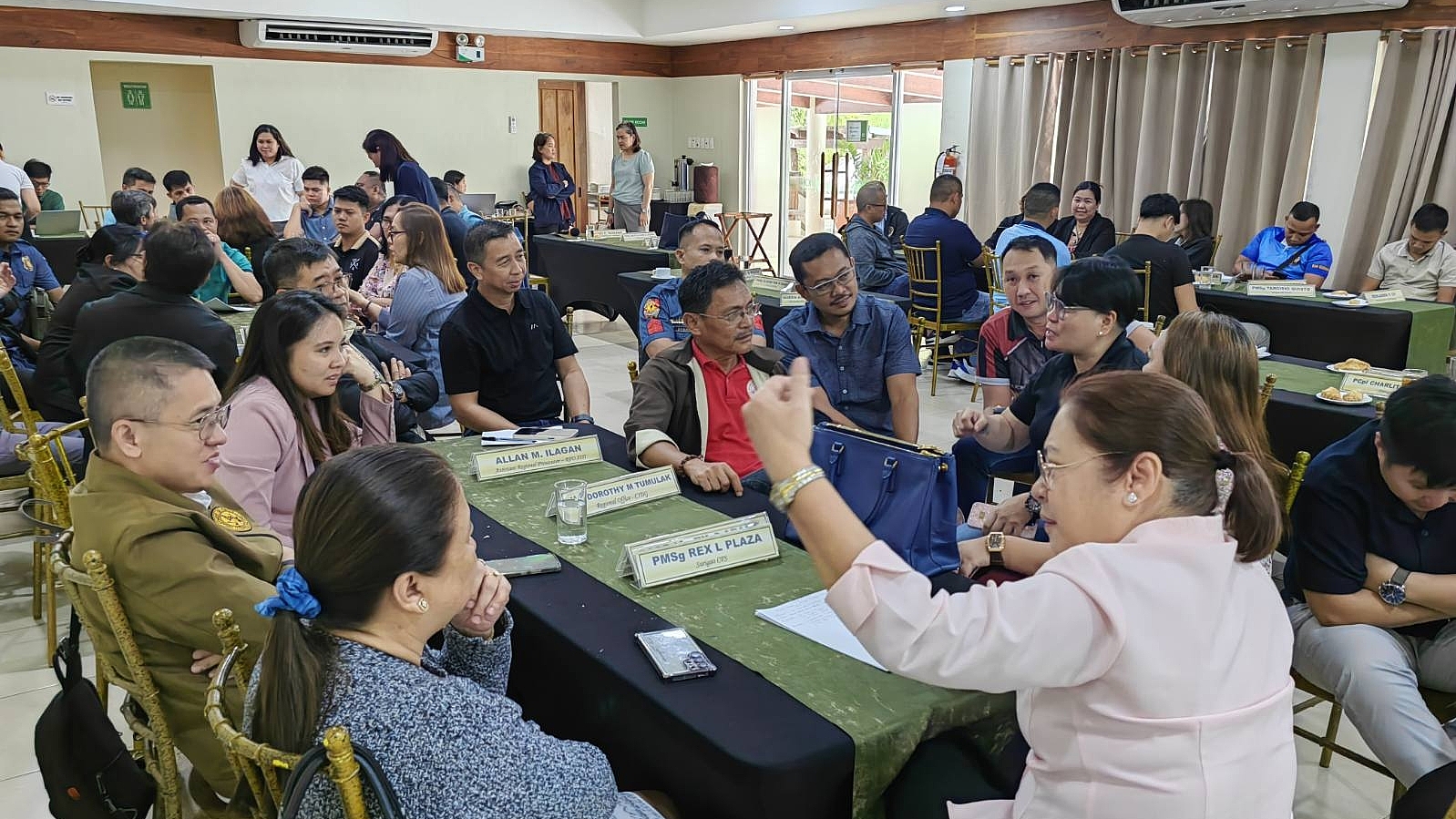
Participants were divided into specialised groups focusing on distinct financial crime areas: Anti-Terrorism and Anti-Terrorism Financing (Groups 1 and 2), Anti-Online Sexual Abuse and Exploitation of Children (OSAEC) and Trafficking in Persons (Groups 3 and 4), and Environmental Laws (Groups 5 and 6). These focus group discussions exposed participants to emerging trends while deepening their understanding of relevant legal frameworks and strengthening investigative strategies. Participants also collaboratively drafted proposals to cascade this knowledge within their regions -- addressing training venues, trainers, topics, and materials -- to ensure sustained capacity building and effective regional coordination.
Workshops were conducted with two main objectives. First, to share and integrate expertise and insights from each Focus Group Discussion across teams, fostering a comprehensive understanding of the complexities of financial crimes as they manifest regionally. Second, to synthesise diverse group outputs into practical, actionable frameworks, transforming theoretical knowledge into concrete strategies applicable in day-to-day investigative and prosecutorial work.
Amongst the legislative instruments discussed were the Anti-Money Laundering Act of 2001 (AMLA), Republic Act No. (R.A.) 9160, which criminalises money laundering and established the Anti-Money Laundering Council (AMLC) to monitor suspicious financial transactions. Other vital laws covered were the Anti-Trafficking in Persons Act (R.A. No. 9208 and its expanded versions R.A. No. 10364 and R.A. No. 11862), the Terrorism Financing Prevention and Suppression Act of 2012 (R.A. No. 10168), and the Anti-Terrorism Act of 2020 (R.A. No. 11479). The Anti-Online Sexual Abuse and Exploitation of Children (OSAEC) Act (R.A. No. 11930) and Department of Justice Circular No. 154, mandating asset forfeiture, were also reviewed. Discussions highlighted the critical coordination between the AMLC, law enforcement, and prosecutors in managing anti-money laundering, terrorism financing, and asset forfeiture cases.
This dialogue activity was organised by the DOJ-National Prosecution Service in collaboration with the PNP Directorate for Investigation and Detective Management, and with the support of the Hanns Seidel Foundation as part of the partnership between the Department of Justice-National Prosecution Service, the PNP Directorate for Investigation and Detective Management, and the Hanns Seidel Foundation on the program, “Dialogue between Prosecutors and Police Investigators from the Northern Mindanao Region,” which began in the Northern Mindanao Region in 2017 and expanded to the Caraga Region in 2024.